





How to choose a contra angle handpiece
Pick in this order: what drives it (an air motor on your chair hose or an electric micromotor), whether the motor needs to be in the box, the gear ratio for the procedure, and the water spray your motor supports. In the table below, the "In the box" and "Runs on" columns rule out most rows before you get to ratio or spray.
Contra angle handpiece comparison
| Product | In the box | Runs on | Ratio · max speed | Bur / tool | Chuck | Spray |
|---|---|---|---|---|---|---|
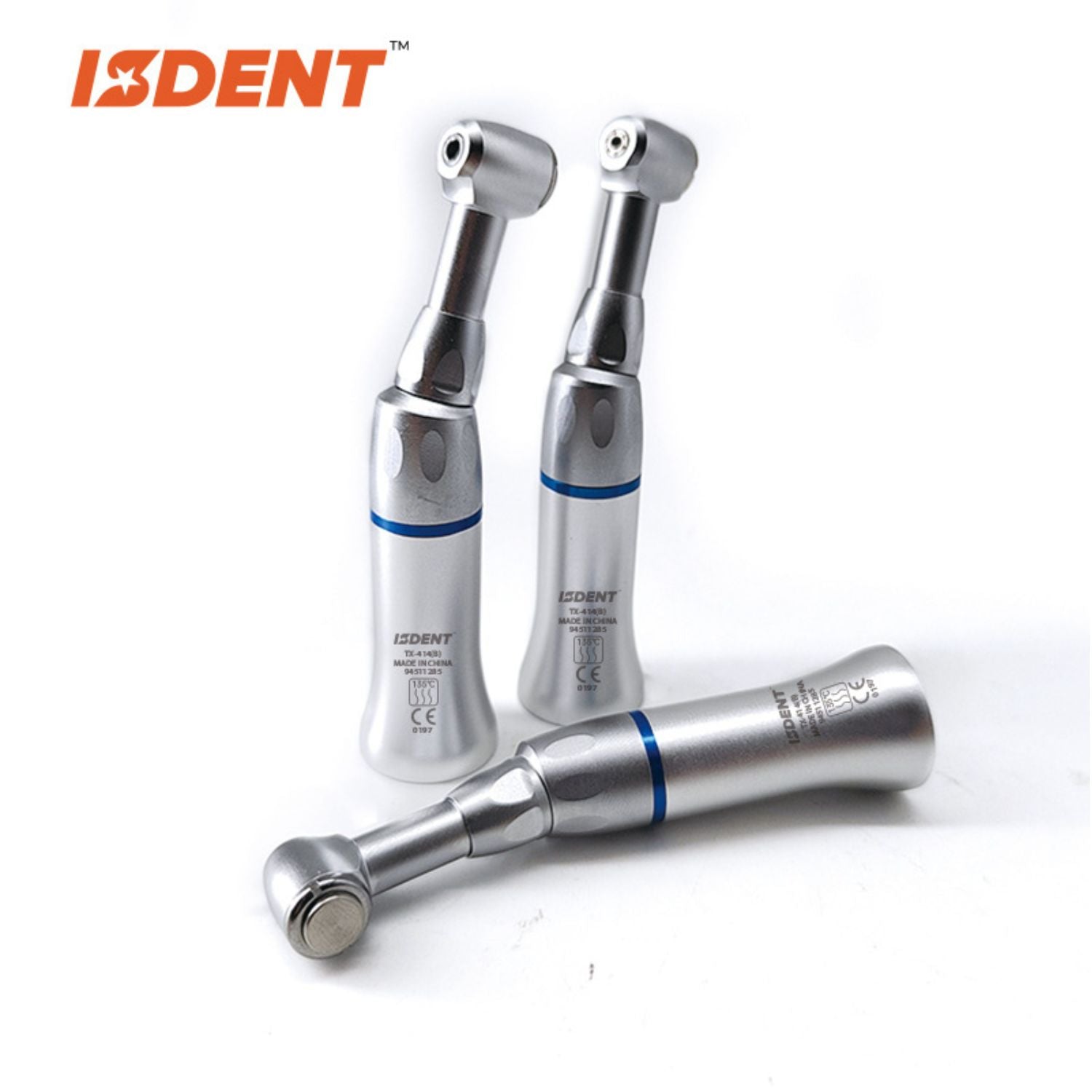
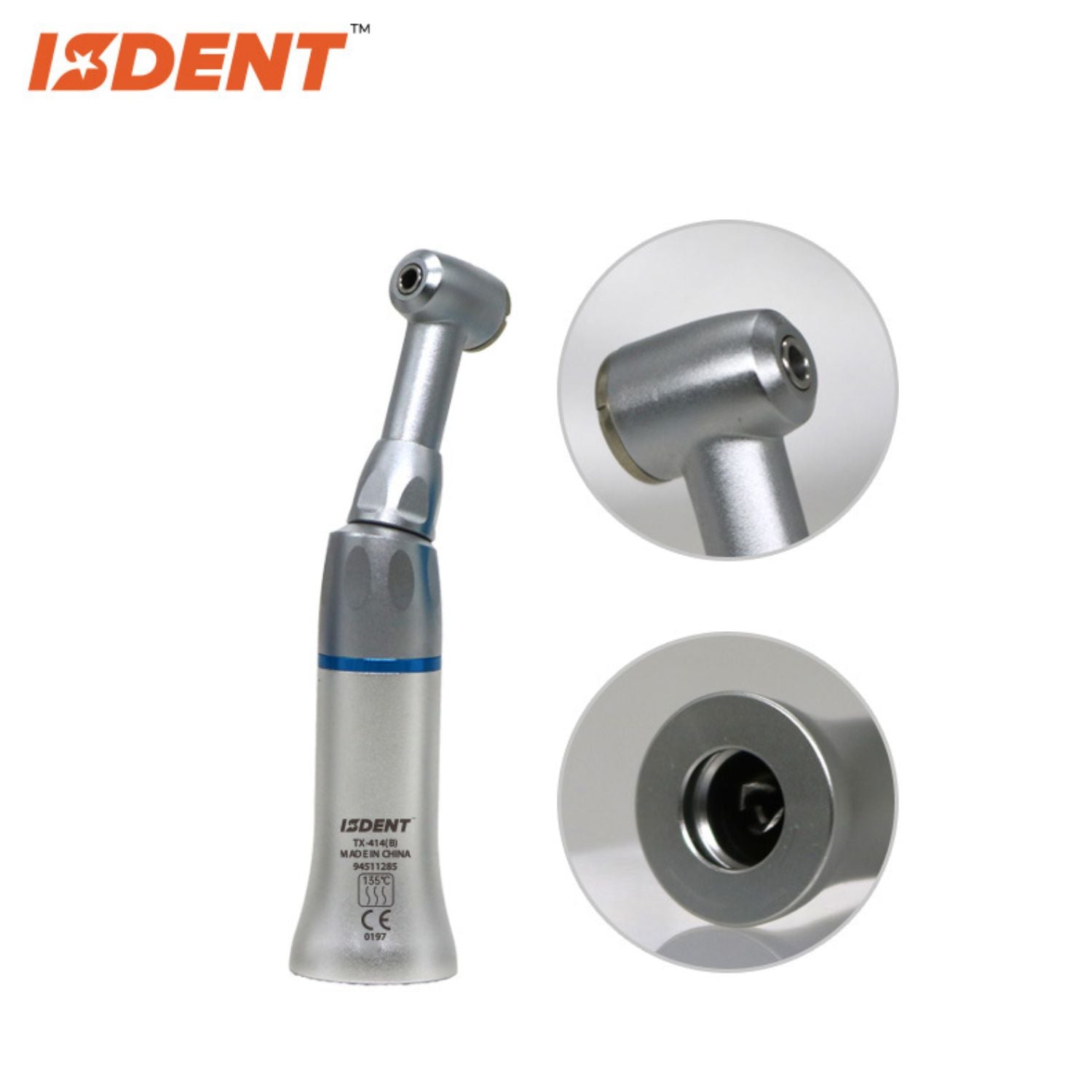
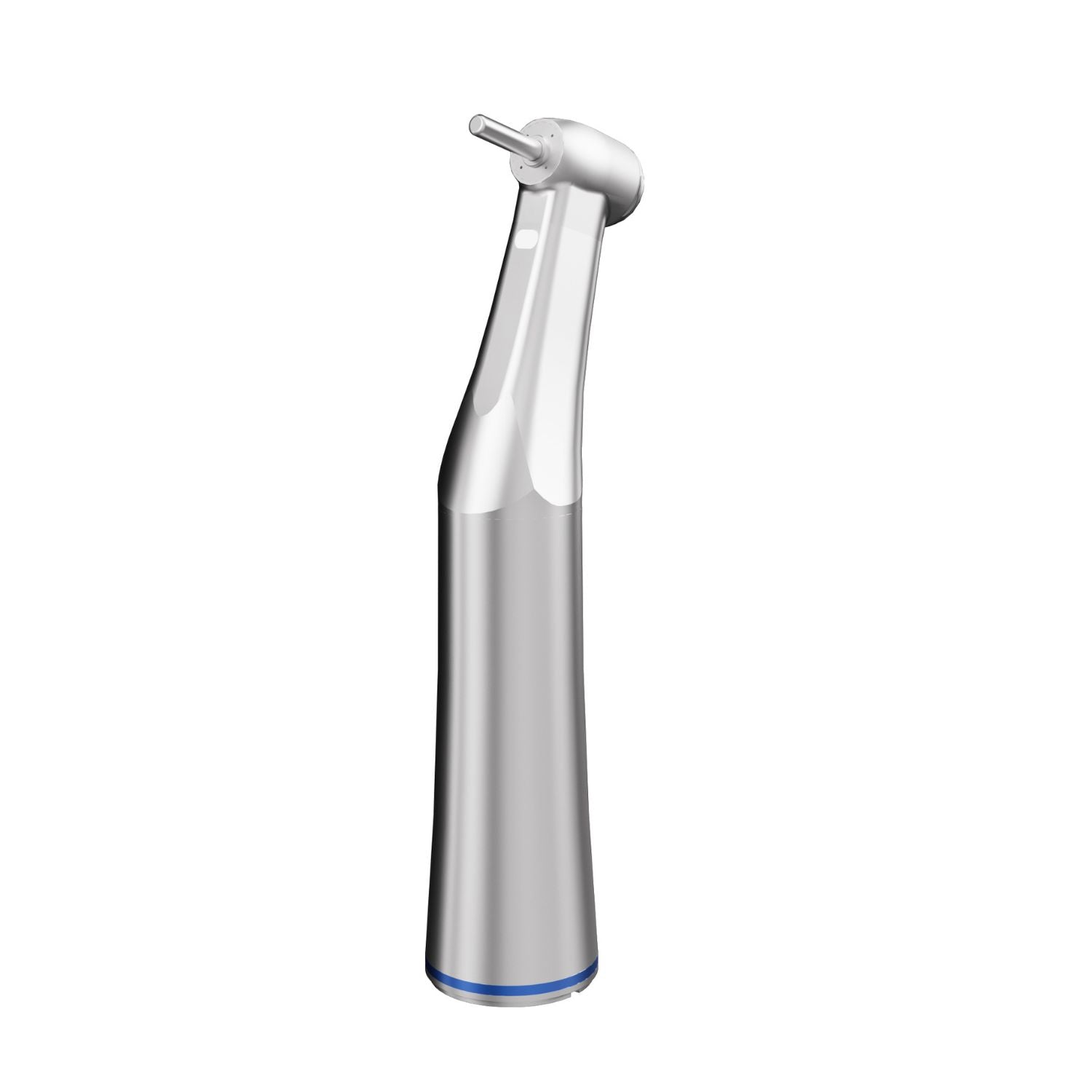
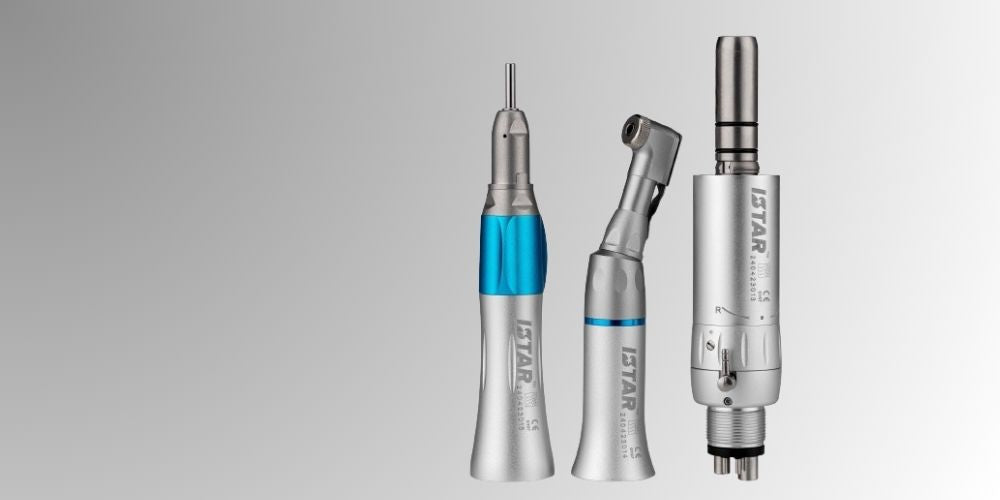
| Low Speed Contra Angle Handpiece, External Water Spray | Contra angle, spanner | Any E-type motor, air or electric | 1:1 · 22,000–27,000 rpm | CA latch, 2.35 mm | Turning latch | External |
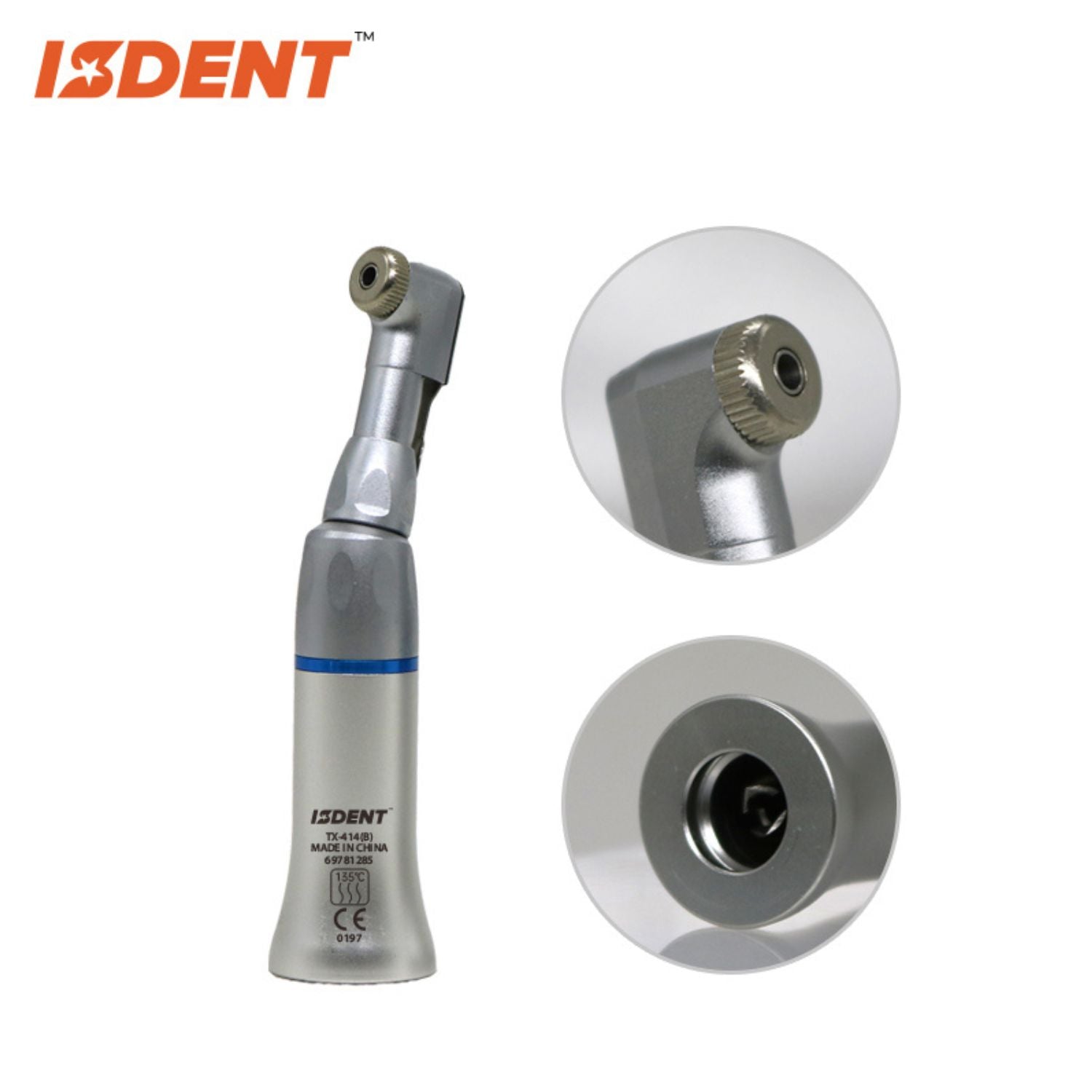
| Low Speed Handpiece with External Water Spray Air Motor, Latch Type | Latch contra angle, external-spray air motor | Included air motor, 2-hole or 4-hole | 1:1 · 20,000 rpm | Latch, 2.35 mm | Latch | External |
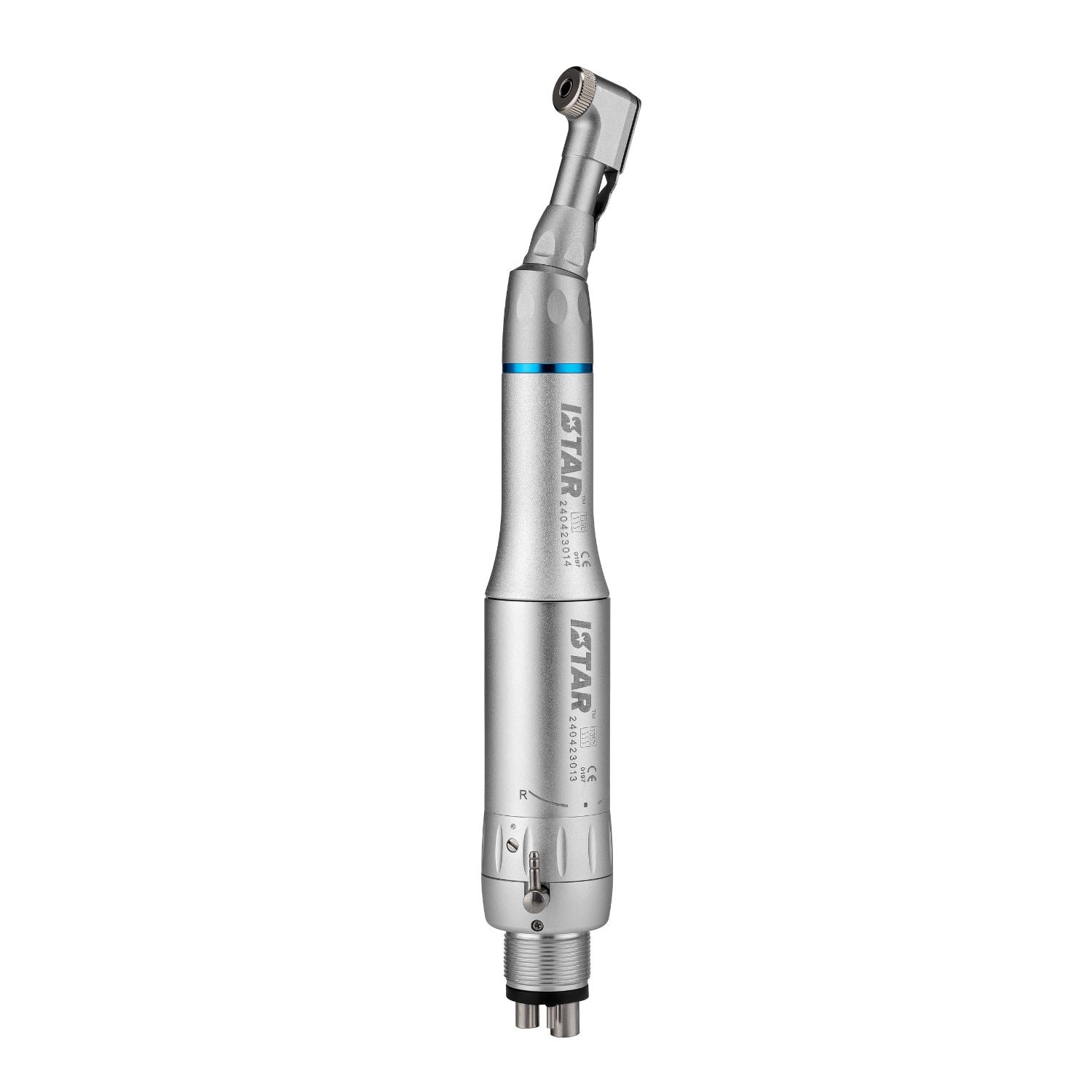
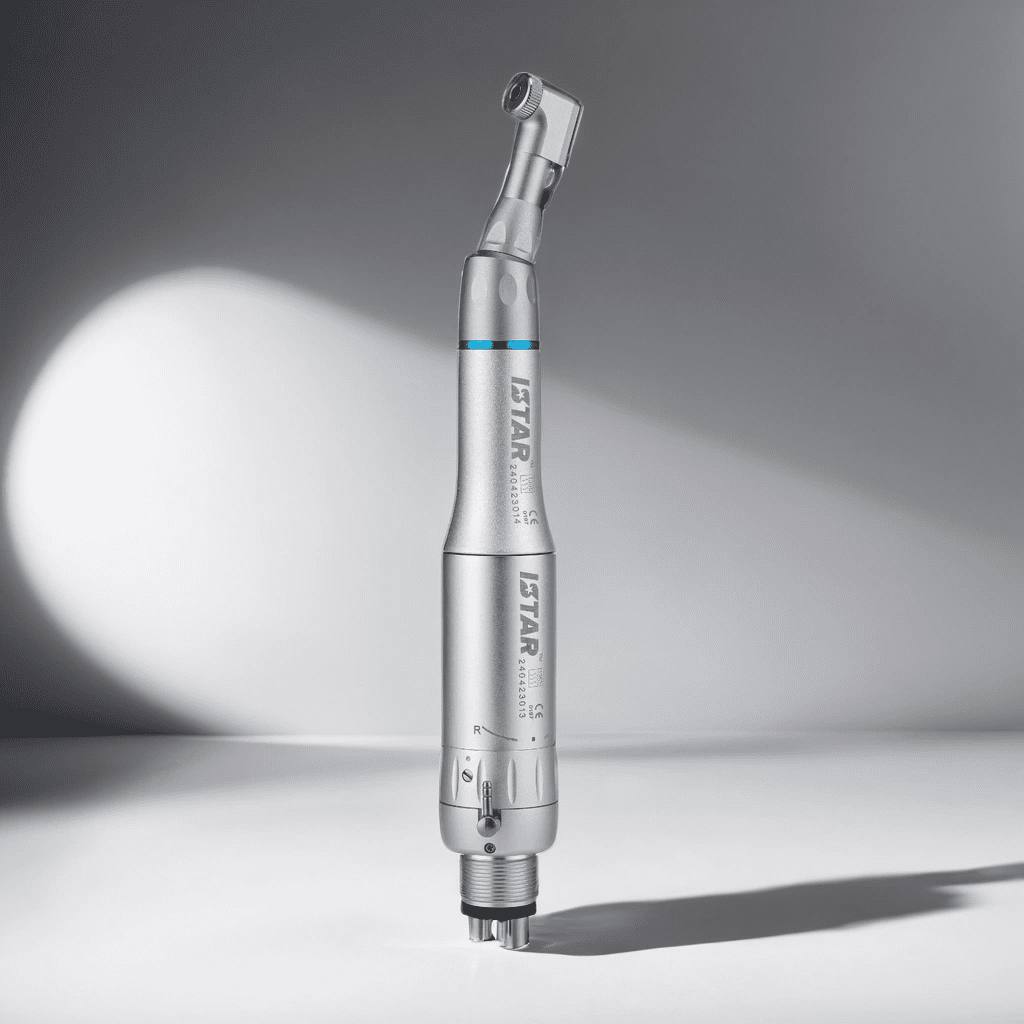
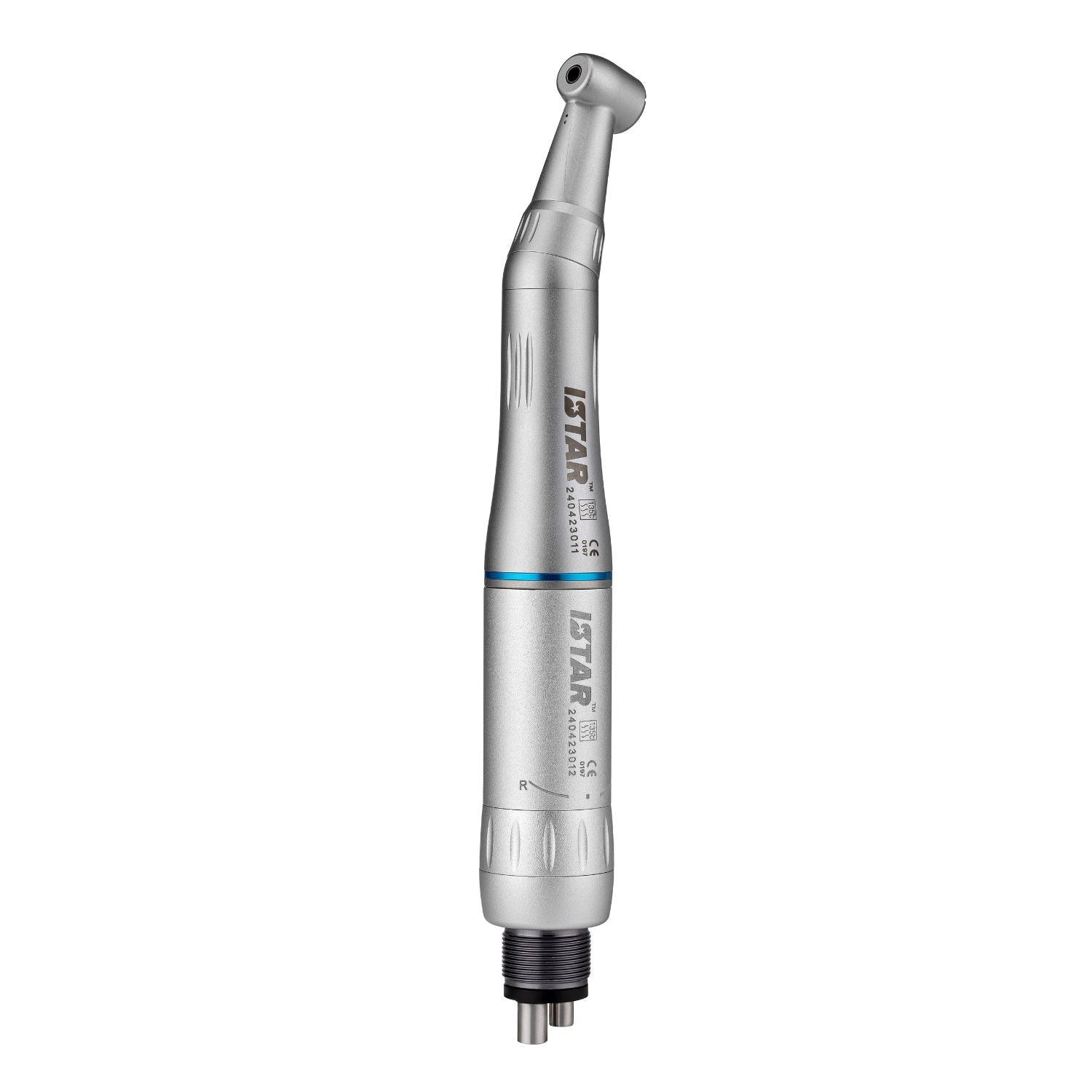
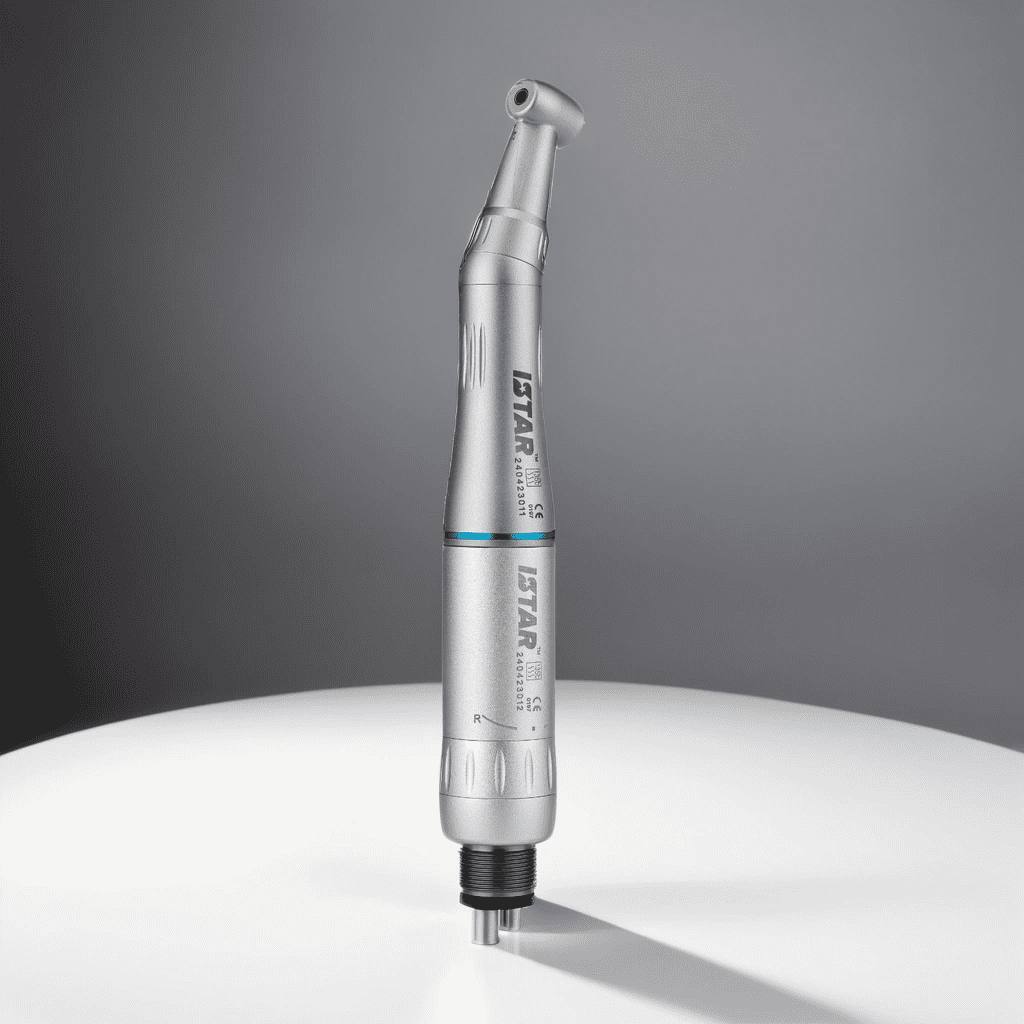
| Low Speed Contra Angle Handpiece with Motor, Internal Water Spray | Contra angle, internal-spray air motor | Included air motor, 2-hole or 4-hole | 1:1 · 20,000 rpm | Latch, 2.35 mm | Not listed | Internal |
| Low Speed Handpiece Set, 2/4 Hole External Water Air Motor | Straight handpiece, contra angle, air motor, water pipe with clamp, accessories, manual | Included air motor, 2-hole or 4-hole; speed and forward/reverse adjustable | 1:1 · 20,000 rpm | Latch, 2.35 mm | Not listed | External |
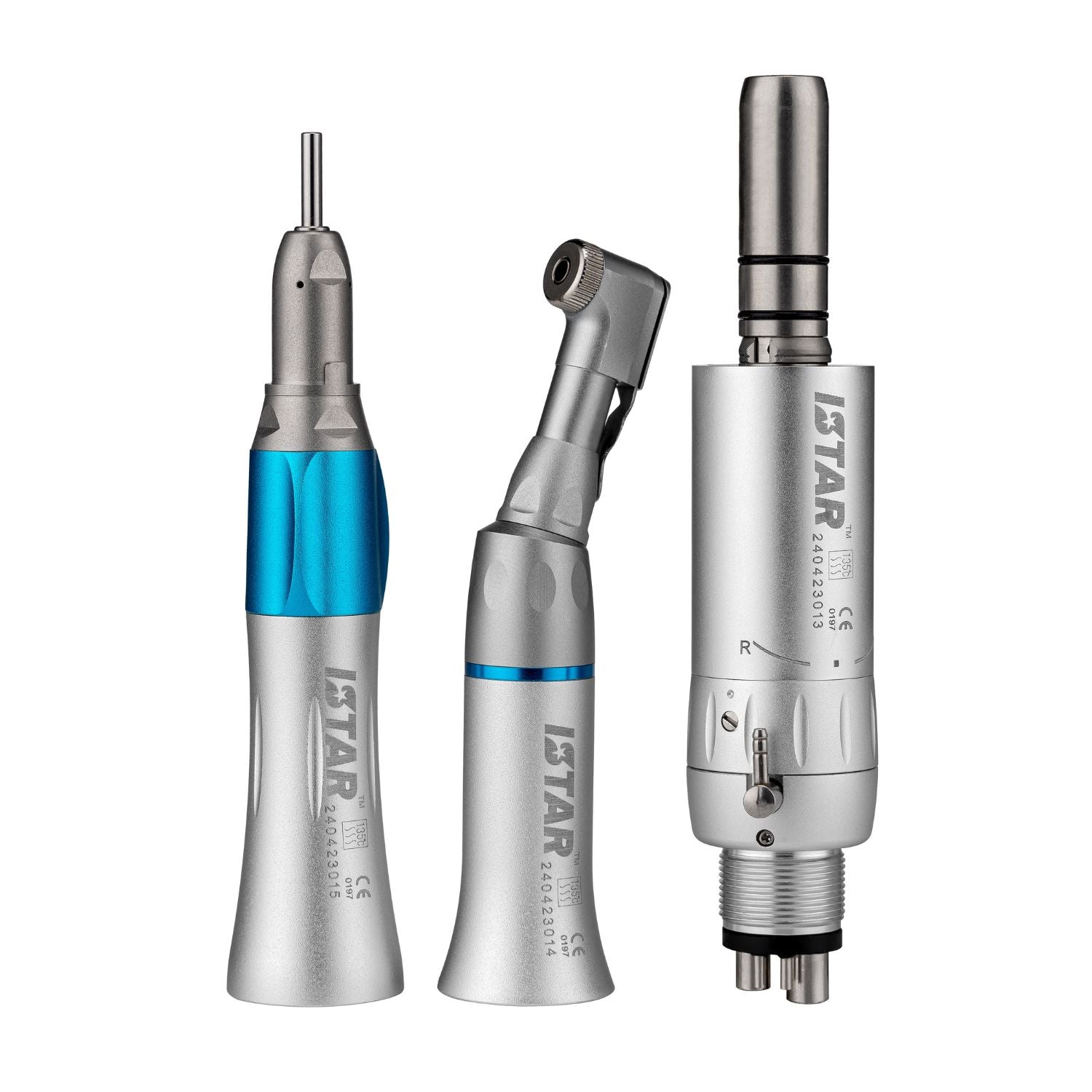
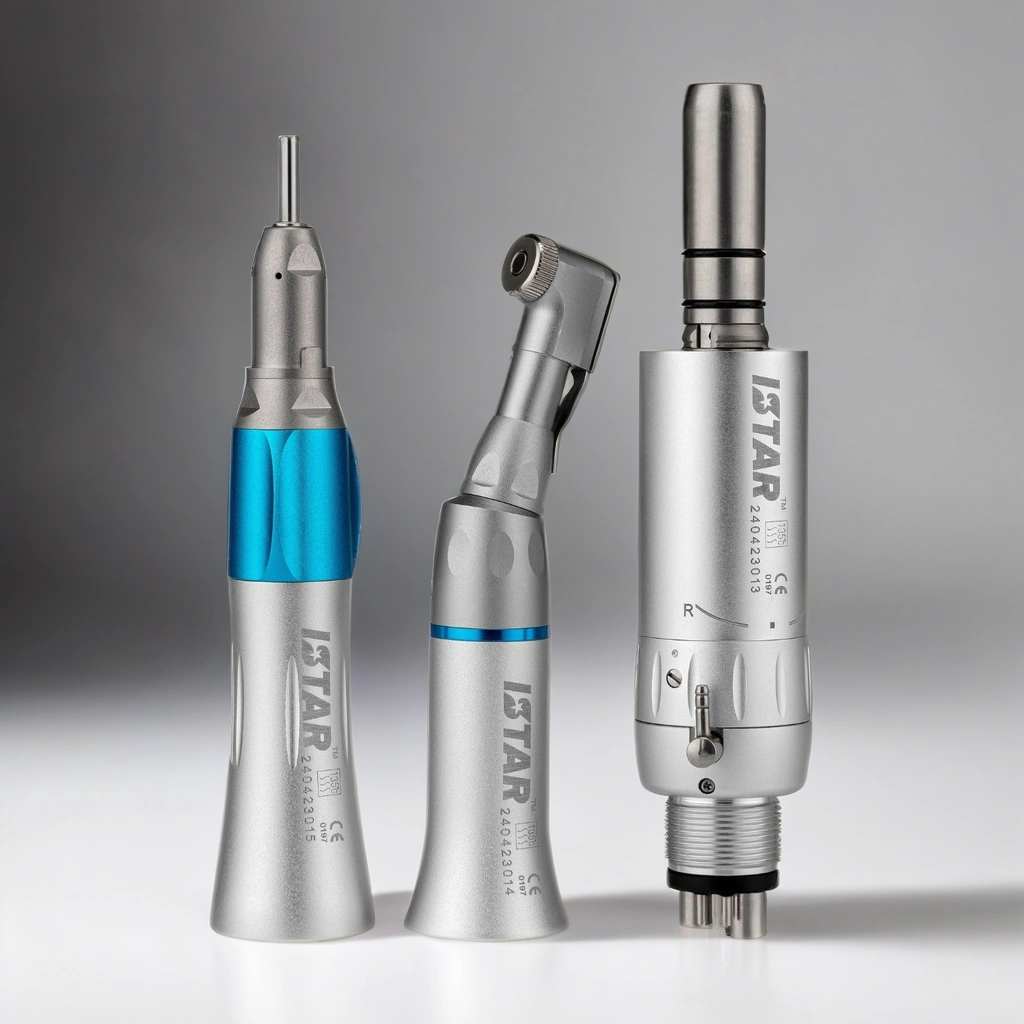
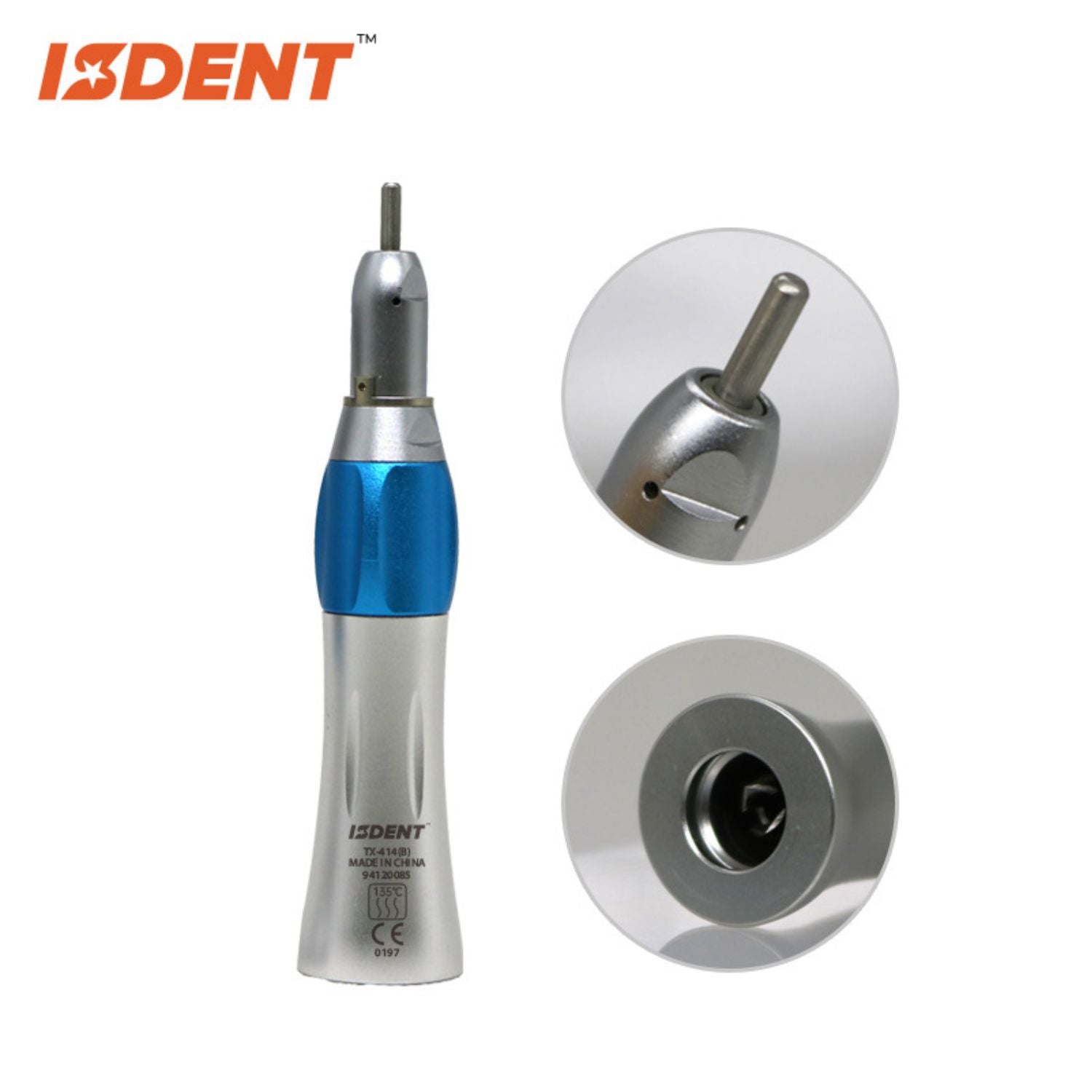
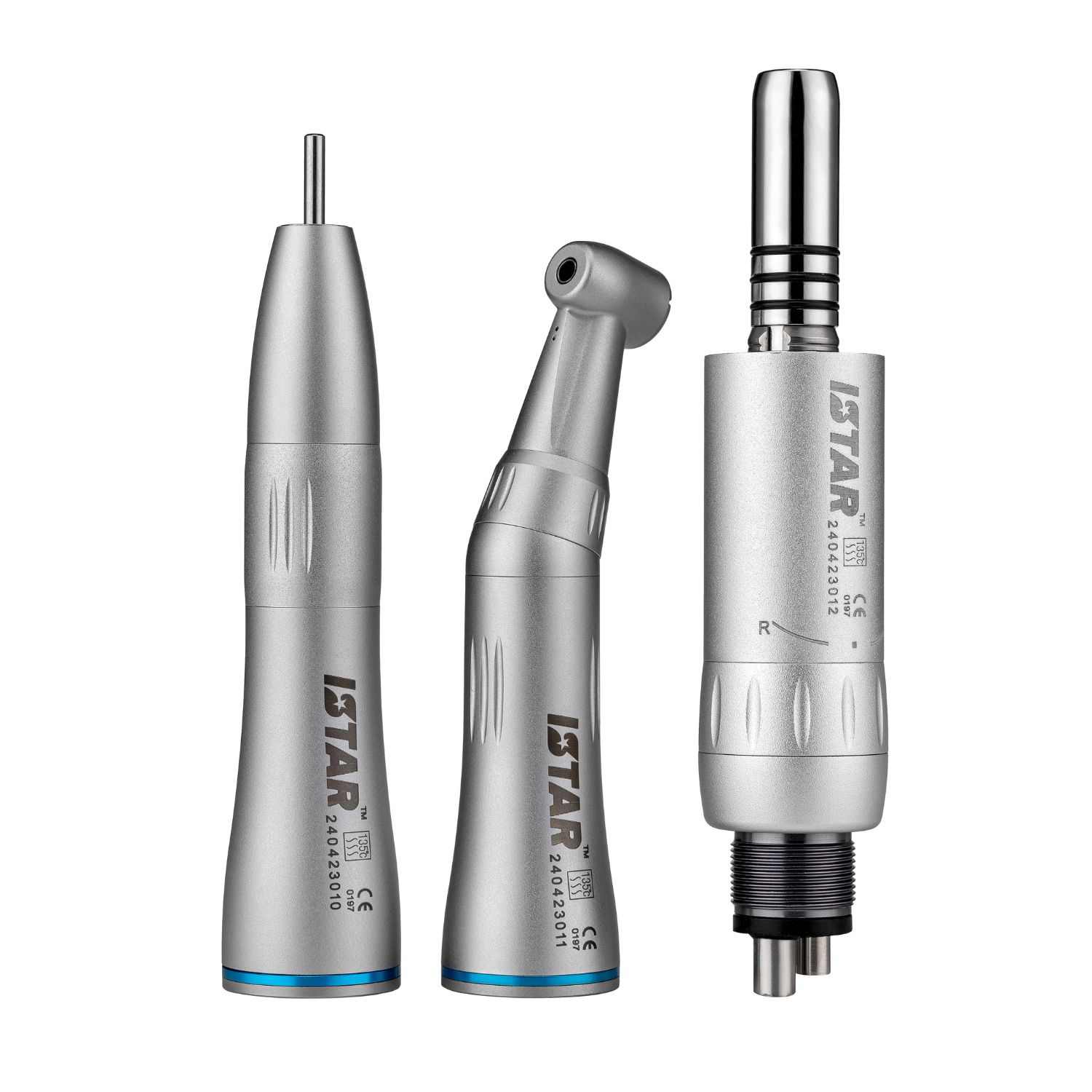
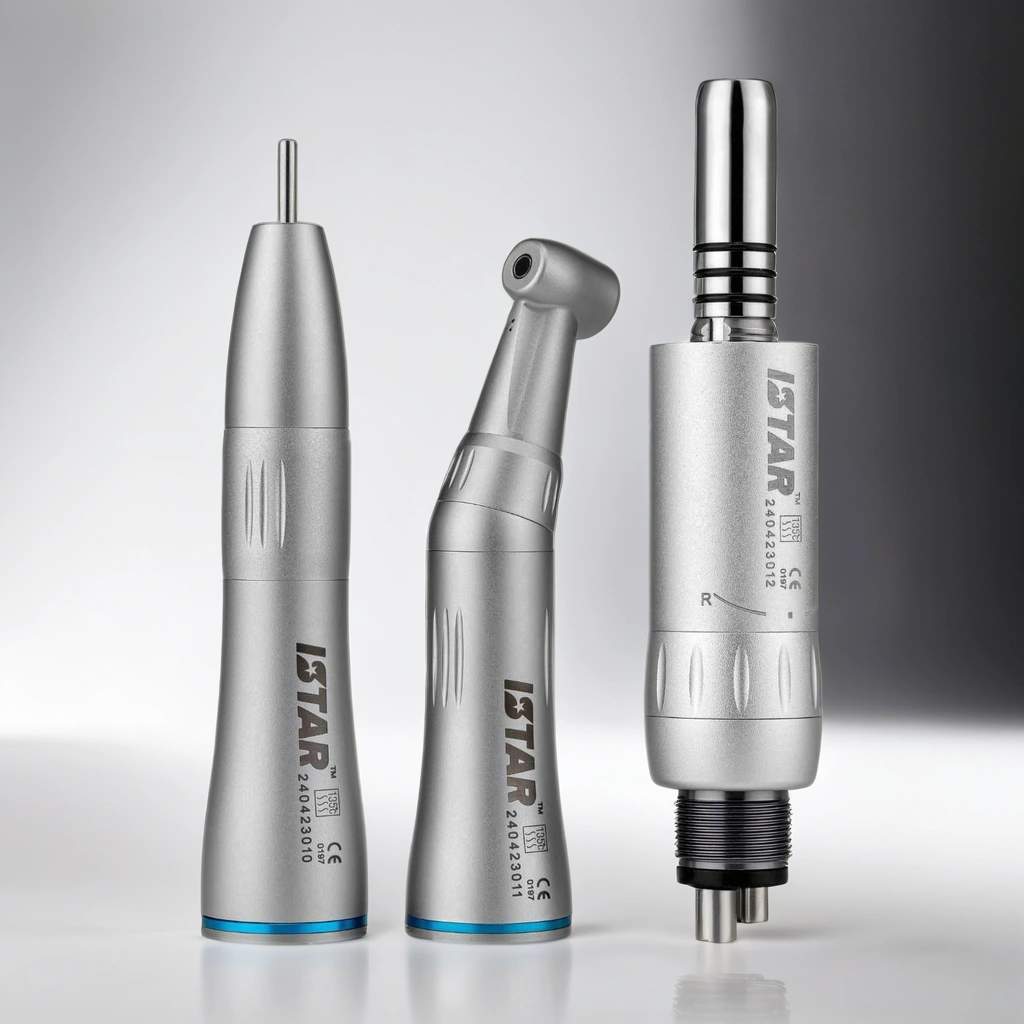
| Low Speed Dental Handpiece Set, Straight & Contra Angle | Air motor, 1:1 straight handpiece, 1:1 contra angle | Included air motor, 2-hole or 4-hole; ISO E-type nose | 1:1 · 20,000 rpm | Latch, 2.35 mm | Latch spring | External |
| Low Speed Handpiece Set with Motor, Internal Water Spray | Straight handpiece, contra angle, air motor, mini wrench, manual | Included air motor, 2-hole or 4-hole; speed and forward/reverse adjustable | 1:1 · 20,000 rpm | Latch, 2.35 mm | Push button | Internal |
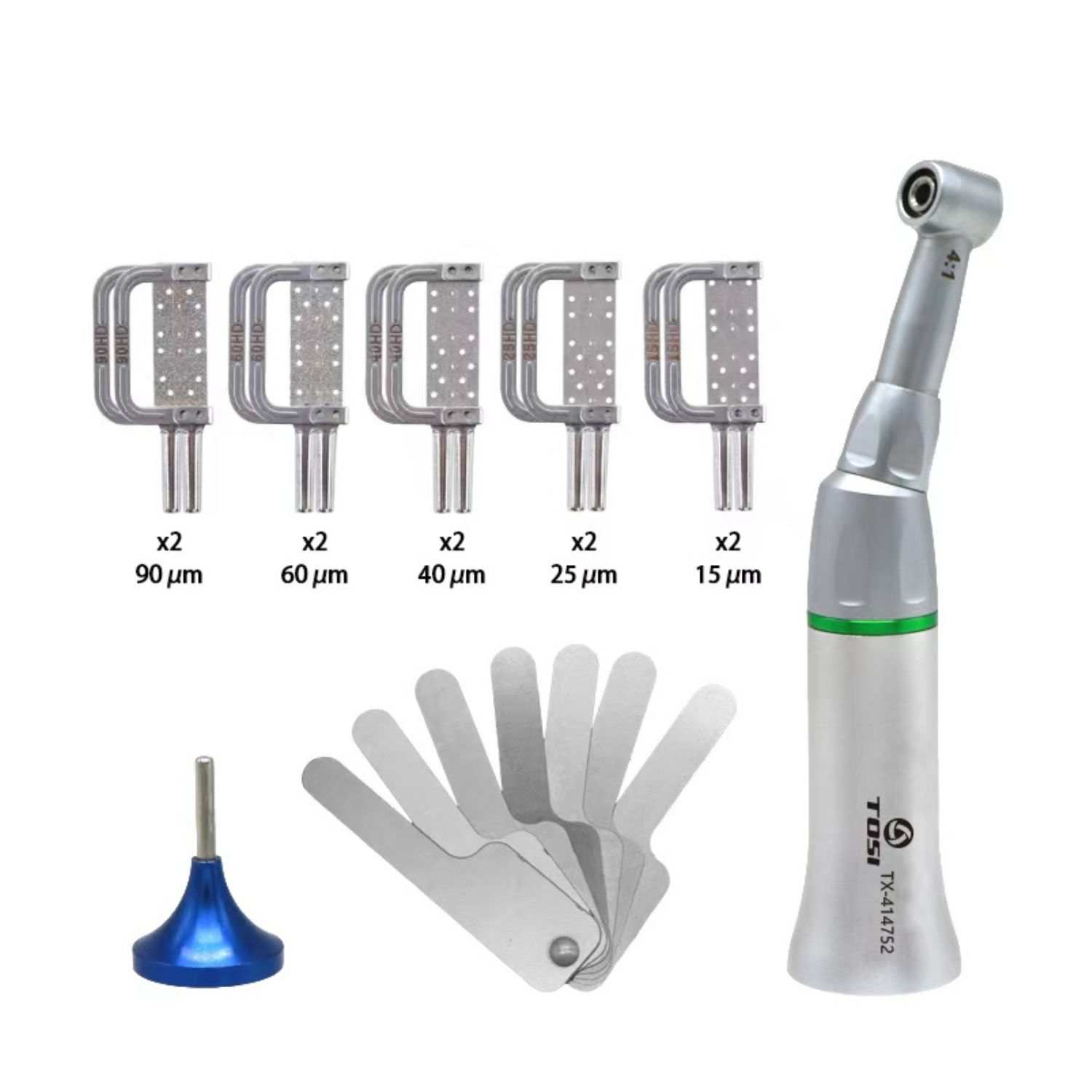
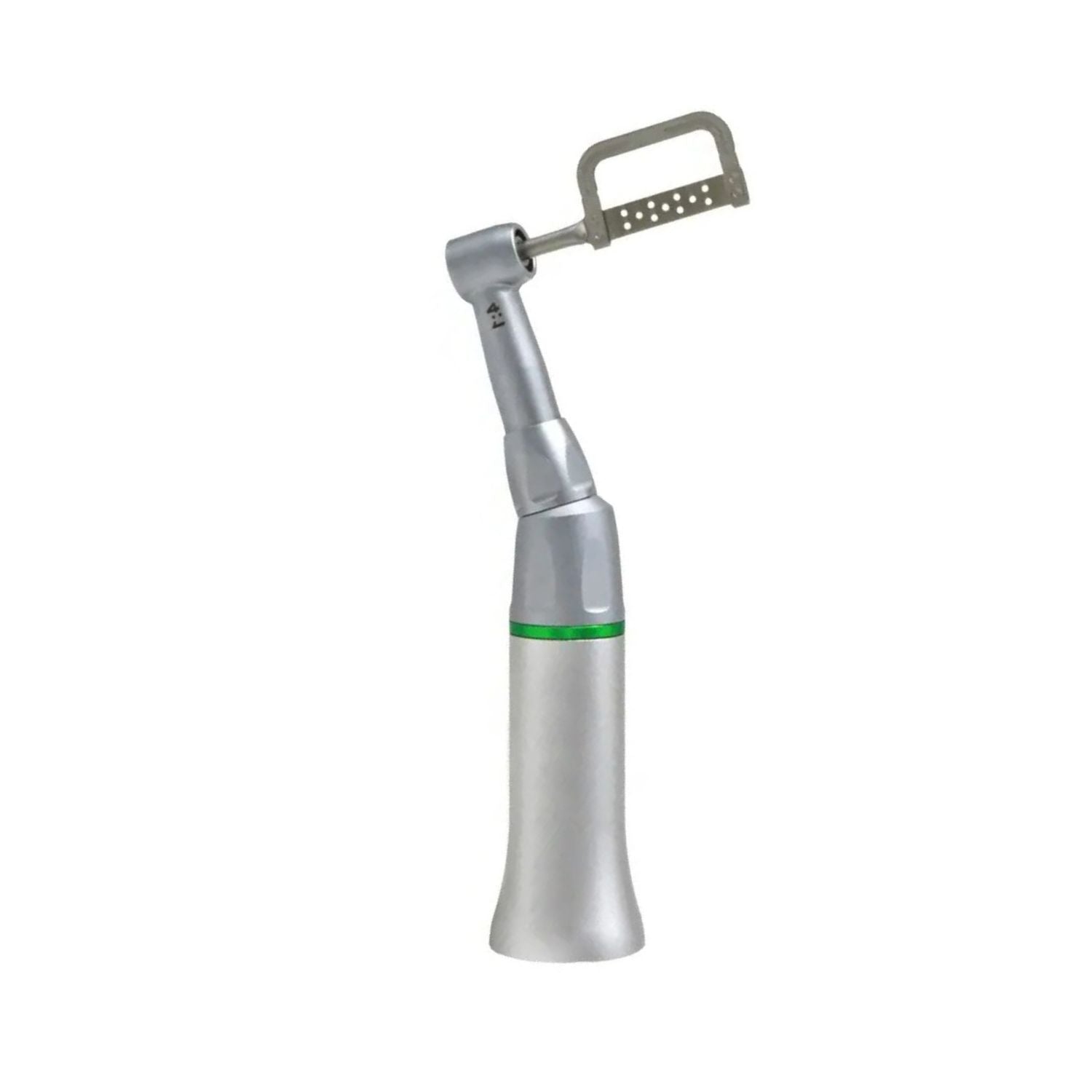
| Dental 4:1 Orthodontic Contra Angle Kit | IPR contra angle, 10 EVA tips, wrench | Motor up to 40,000 rpm | 4:1 · 10,000 rpm | EVA tips | Wrench | Not listed |
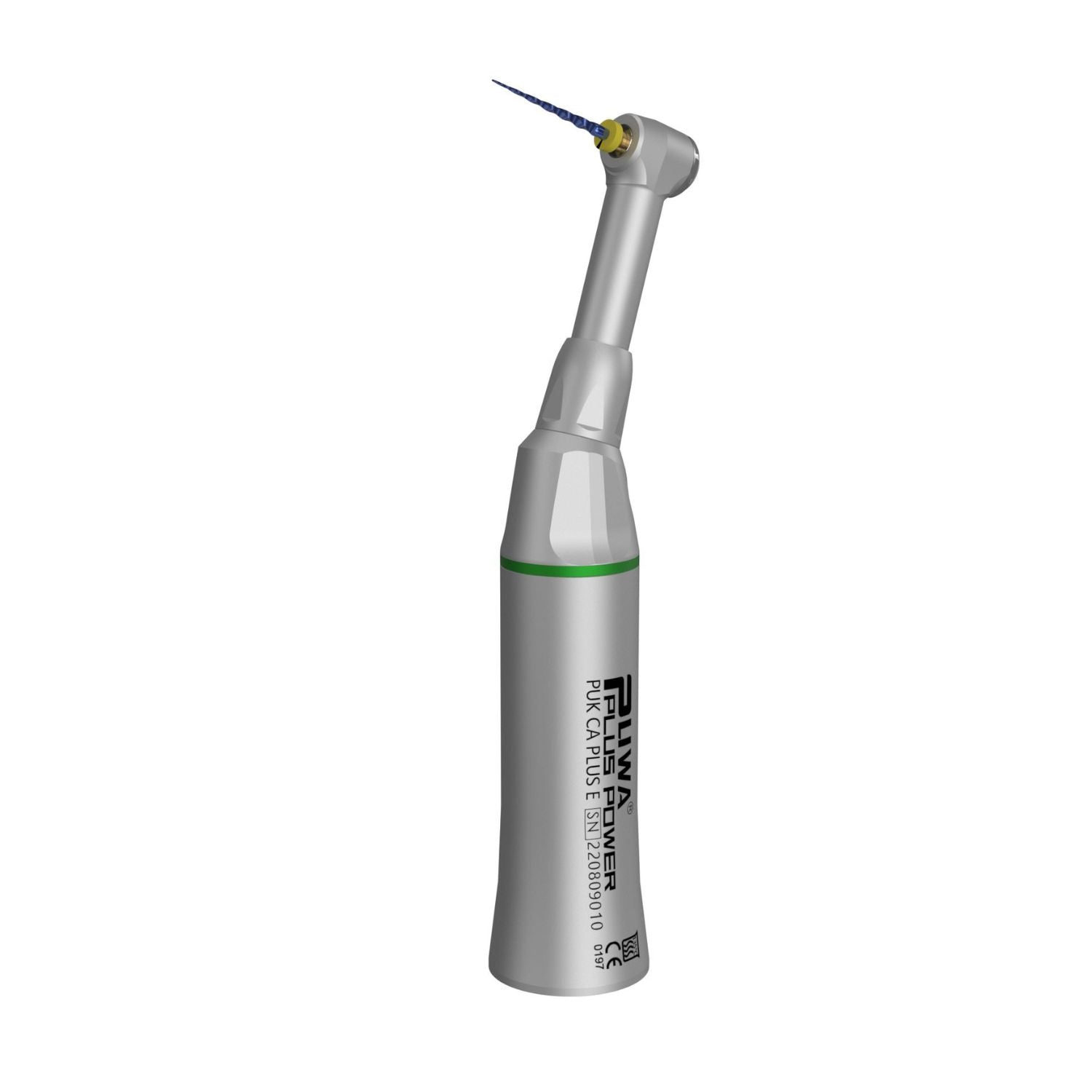
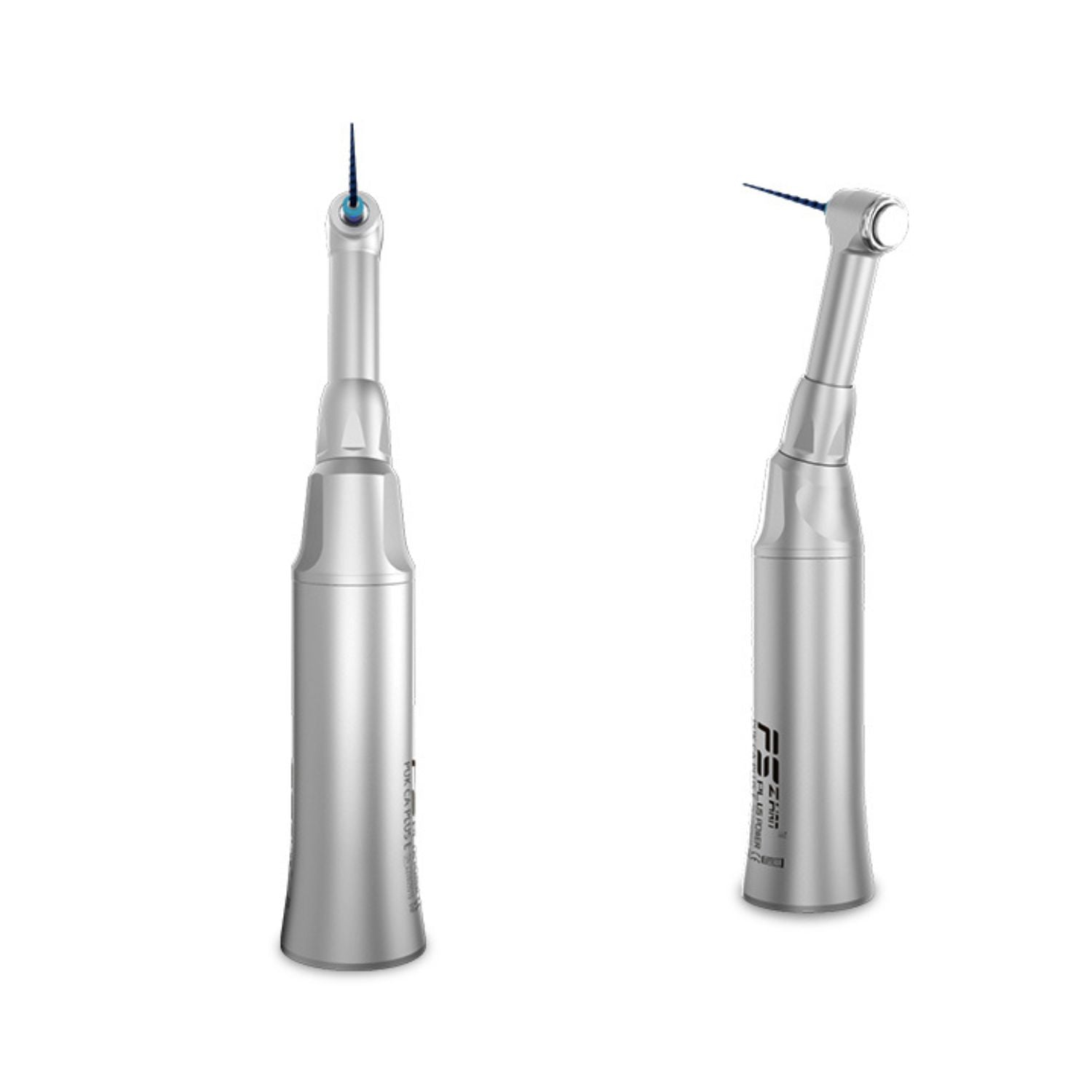
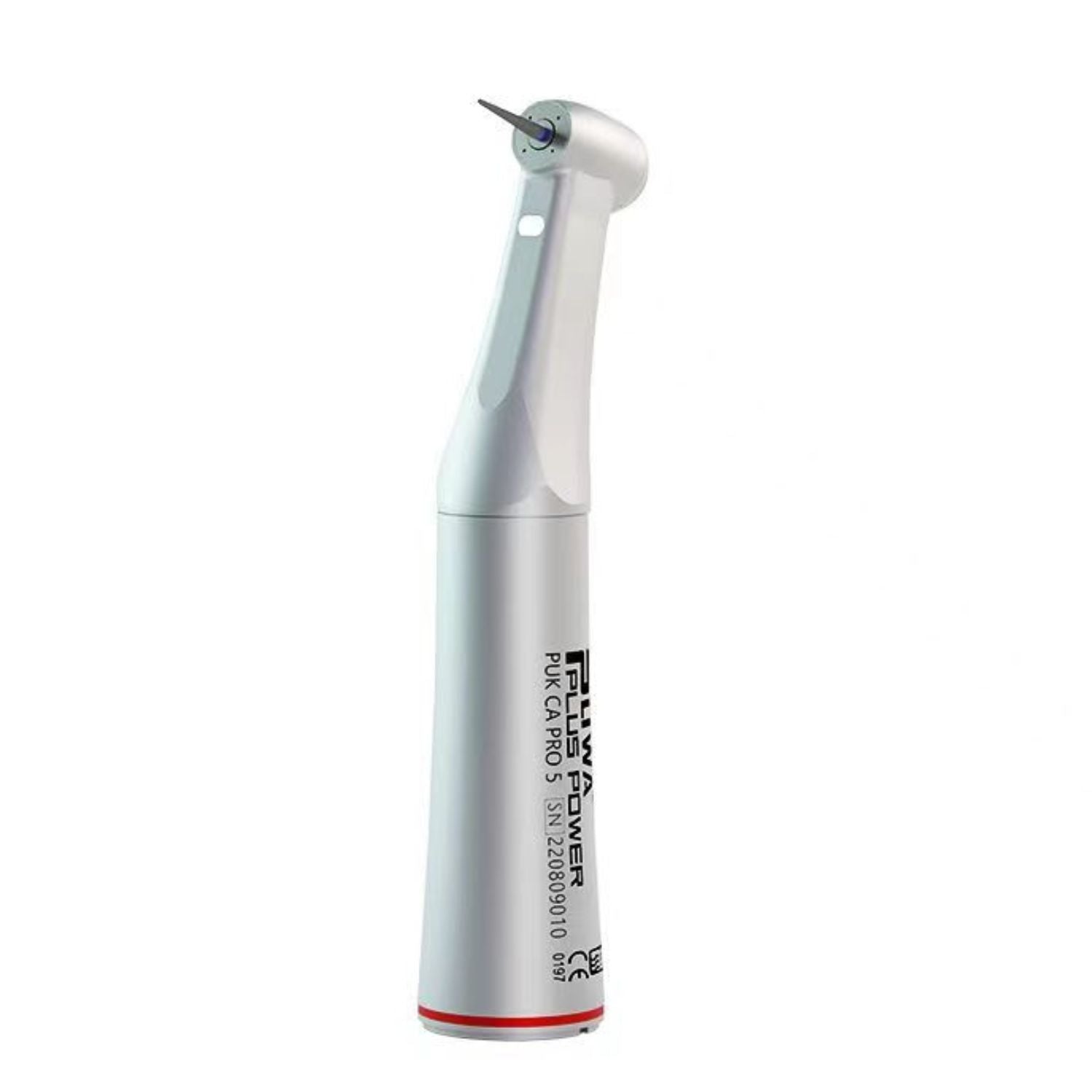
| Electric Endomotor Handpiece, 16:1 | Handpiece only | E-type electric micromotor | 16:1 · 2,500 rpm | Latch-shank files, 2.34–2.35 mm | Push button, 8 × 10 mm mini head | External |
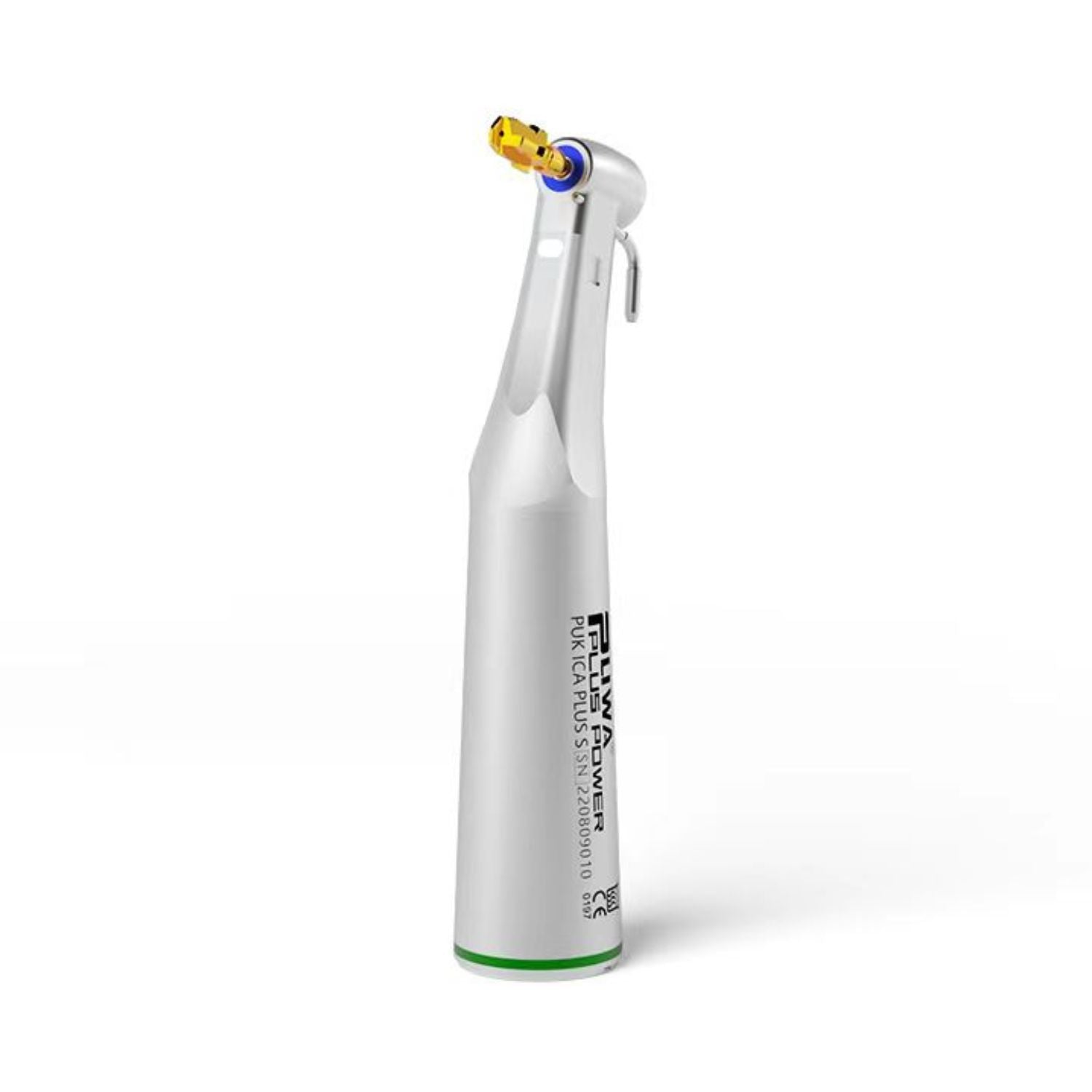
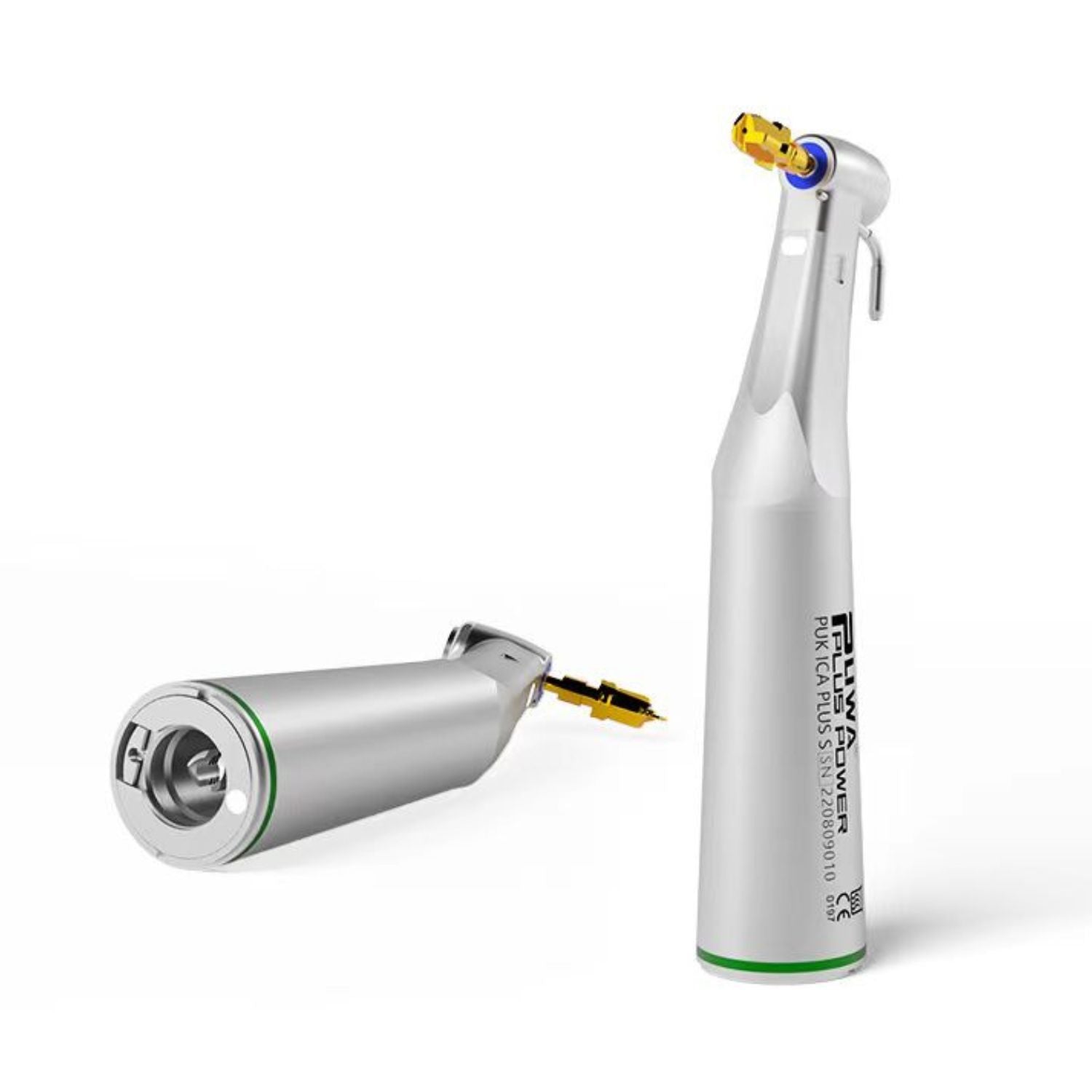
| Implant Handpiece, 20:1 | Handpiece only | E-type electric micromotor | 20:1 · 2,000 rpm | Latch-shank drills, 2.34–2.35 mm | Push button | External |
| Electric High Speed Dental Handpiece, 1:5 | Handpiece only | E-type electric micromotor | 1:5 · 200,000 rpm | FG, 1.59–1.60 mm | Push button | 4-point spray |
Air motor or electric motor: check the connection first
Look at the end of the low-speed hose on your delivery unit and count the holes. That's the connector the air motor has to match (hose connectors for air-driven handpieces are standardized in ISO 9168). Choose the matching 2-hole or 4-hole version on the product page; both cost the same.
The joint between motor and head is a separate thing. It's the E-type nose defined in ISO 3964, and air motors and electric micromotors use the same one. So if you already own an E-type motor, the head-only Low Speed Contra Angle Handpiece, External Water Spray is all you need. Keep the motor inside that head's rated 22,000–27,000 rpm.
Air pressure matters as much as hole count. The air motors are rated at 29–36 psi (0.20–0.25 MPa), except the Low Speed Dental Handpiece Set, which runs at 36–51 psi (0.25–0.35 MPa). Set the chair to match before the first use.
Every electric contra angle handpiece here ships as the head alone, with no motor, control box or power cord in the box. You'll need an electric micromotor with an E-type nose; see micromotors and electric handpieces. If your operatory only has air lines, the 1:1 kits are the realistic choice. The fiber-optic heads (20:1 and 1:5) carry light from the motor to the working end, so the light only works on a motor with a built-in light source.
What the gear ratio changes
The ratio describes what happens to motor speed on its way to the bur. At 1:1 the bur turns at motor speed, about 20,000 rpm on the included air motors. A 16:1 or 20:1 head divides it, and a 1:5 head multiplies it by five.
Run a 40,000 rpm micromotor through our electric heads and you land exactly on their listed maximums: 40,000 ÷ 16 = 2,500 rpm, 40,000 ÷ 20 = 2,000 rpm, 40,000 × 5 = 200,000 rpm. The 4:1 kit works the same way, from a 40,000 rpm motor down to 10,000 rpm at the tip.
What each ratio is for:
- 1:1: caries removal, finishing and polishing restorations, and adjusting crowns and dentures. These are the everyday low-speed jobs.
- 4:1: interproximal reduction (IPR) for orthodontic cases. The kit's abrasives come in five double-sided grits: 90 µm for opening contacts, 60 µm for reduction, 40 µm for contouring, 25 µm for finishing and 15 µm for pre-polishing.
- 16:1: shaping root canals with rotary NiTi files. The push-button mini head measures 8 × 10 mm (about 0.3 × 0.4 in), small enough for tight posterior access and pediatric patients.
- 20:1: drilling implant sites at low speed.
- 1:5: cutting and crown preparation with FG burs on an electric motor instead of an air turbine. This head adds ceramic bearings, an anti-suckback head and a 304 stainless steel body.
One thing a ratio can't give you is adjustable torque. On 16:1 and 20:1 work, torque limits come from the endo or implant motor, so check that motor's settings rather than the head.
Bur shanks: 2.35 mm latch or 1.6 mm FG
Two shank sizes cover this whole collection, and ISO 1797 sets the dimensions for both. Latch-type burs (often labeled CA or RA) have a 2.35 mm (0.093 in) shank with a notch at the end that the latch or push-button chuck grips. FG burs are 1.6 mm (0.063 in) and held by friction.
The 1:5 head takes FG burs. The 4:1 kit uses EVA tips. Every other head here takes 2.35 mm latch-shank burs, files or drills.
External or internal water spray
With external spray, a thin water tube runs along the outside of the handpiece and clips near the head. The Low Speed Handpiece Set, 2/4 Hole External Water Air Motor includes that tube and clamp. With internal spray, water travels through the air motor and the handpiece body, so there's no tube to fit or knock loose.
The catch is the motor. ISO 3964 couplings come in versions with and without an internal spray supply, and an internal-spray handpiece only gets water from a motor that has the internal channel. If the motor on your chair today is external-spray, buy an external-spray head, or replace the motor and handpiece together with one of the internal-spray kits.
Cleaning, sterilization and lubrication
CDC infection-control guidance calls for heat-sterilizing dental handpieces, low-speed motors and their attachments between patients. The air-driven heads and kits are listed as autoclavable to 275°F (135°C). On the Low Speed Handpiece Set with Motor, Internal Water Spray, that rating covers the air motor and handle as well.
Follow the manual in the box for lubrication and cycle times. If a head starts to wobble, runs hot or won't hold a bur, stop using it and read our guide on how to repair dental handpieces.
Pack pricing, shipping and returns
Need more than 10, distributor pricing or your own logo on a bulk order? Message us on WhatsApp or through the contact page. You can also pay by offline bank transfer; see our payment information. For large orders, ask our team to confirm any available deposit arrangement before paying.
Handpieces ship by air. Outside the US, delivery takes up to 15–20 days. To cancel, contact us within 12 hours of ordering. See our shipping policy for delivery details.
If something isn't right, tell us within 15 days of delivery. Returned items must be unused and in their original packaging, and they have to reach us within 20 days of the return form being issued.
For hygiene reasons, a non-defective handpiece can only come back with a valid reason, such as ordering the wrong hole count, and in that case you pay the return shipping. If an item arrives defective, send your order number, proof of payment and photos, and we'll arrange the fix or the return. The full terms are in our return and refund policy.
FAQ
How is a contra angle different from a dental straight handpiece?
A dental straight handpiece holds the bur in line with the handle and takes long HP-shank burs. It's often used outside the mouth, for adjusting dentures and other appliances. Three kits here include both a straight handpiece and a contra angle. Single units are under straight handpieces.
Can I polish teeth with these?
Not with the contra angle head itself. Prophy cups and brushes go on a prophy angle, which attaches to the low-speed motor. Disposable and reusable options are under prophy handpieces.
How loud are they?
The listed noise level is 60 dB or less for the Latch Type, 2/4 Hole External Water and both internal-spray models. It's 70 dB or less for the Low Speed Dental Handpiece Set, and 65 dB or less for the 20:1 implant head.