
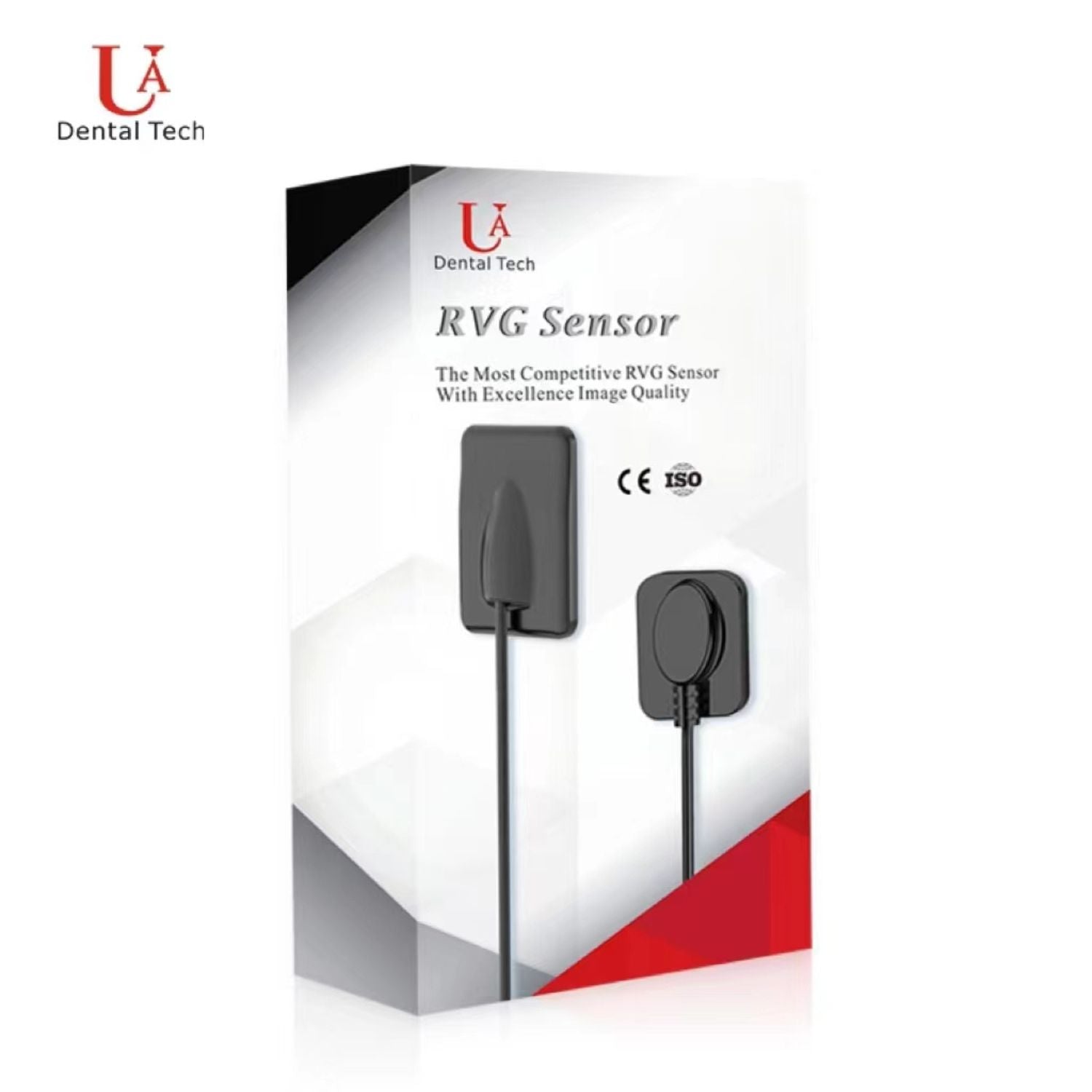
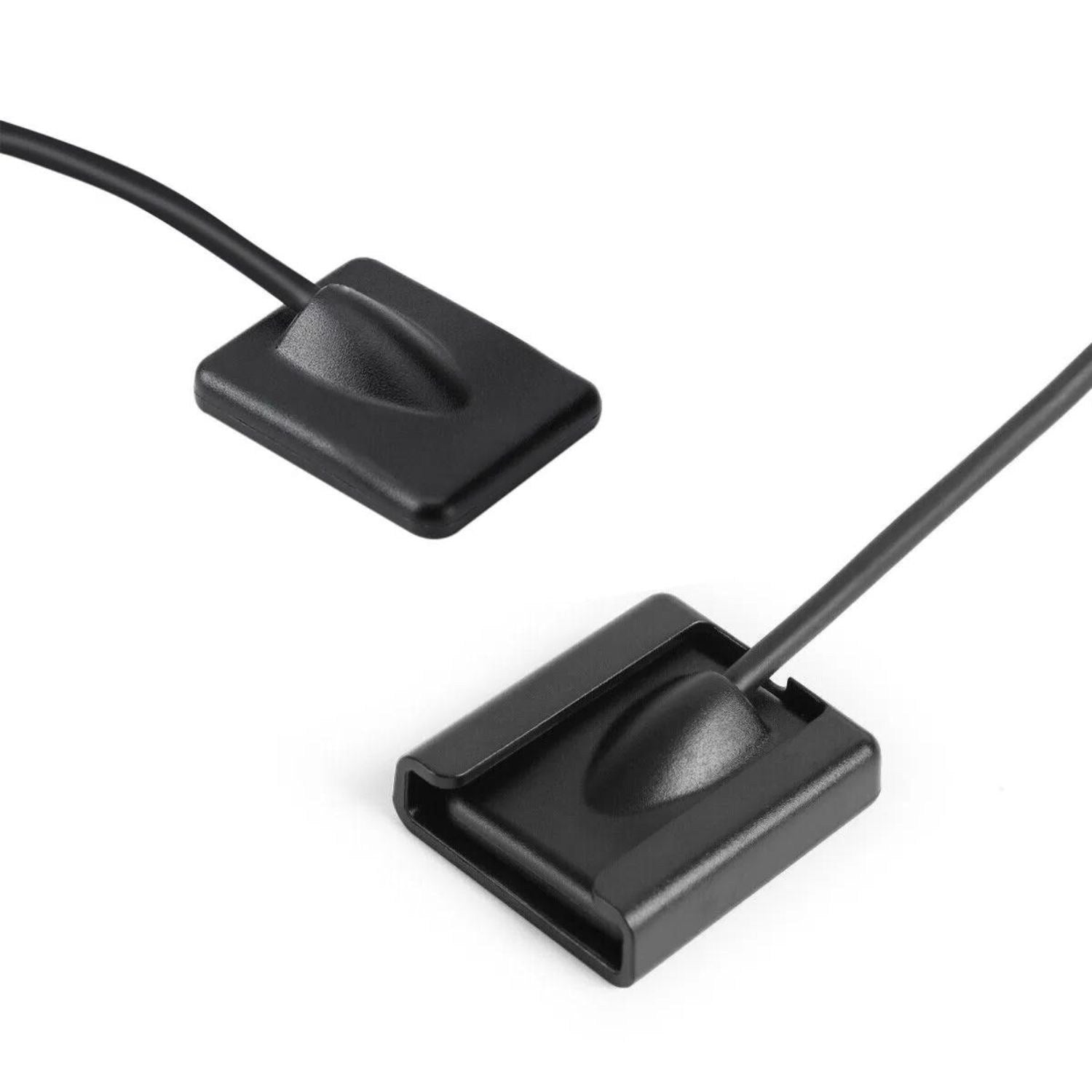
Dental RVG sensor comparison
| Portable Digital RVG Intraoral Sensor | XVS2530 Size 1.5 | |
|---|---|---|
| Imaging (active) area | Ask us before ordering | 25 × 30 mm |
| Housing | Ask us before ordering | 30 × 37 mm, 5 mm thick |
| Resolution | 20 lp/mm true, 25 lp/mm theoretical | 12–14 lp/mm actual |
| Bit depth | 16-bit | 16-bit |
| Connection | USB 2.0 | USB 2.0 |
| Cable | 3 m, extendable | 3 m, extendable |
| Windows | 7, 8, 10 (64-bit) | 7, 8, 10 |
| Software | Ask us | Licensed, free for life |
| Image formats | Not listed | BMP, DIR, DCM, JPEG, PNG, TIFF |
| Dust and water rating | Not listed | IP67 |
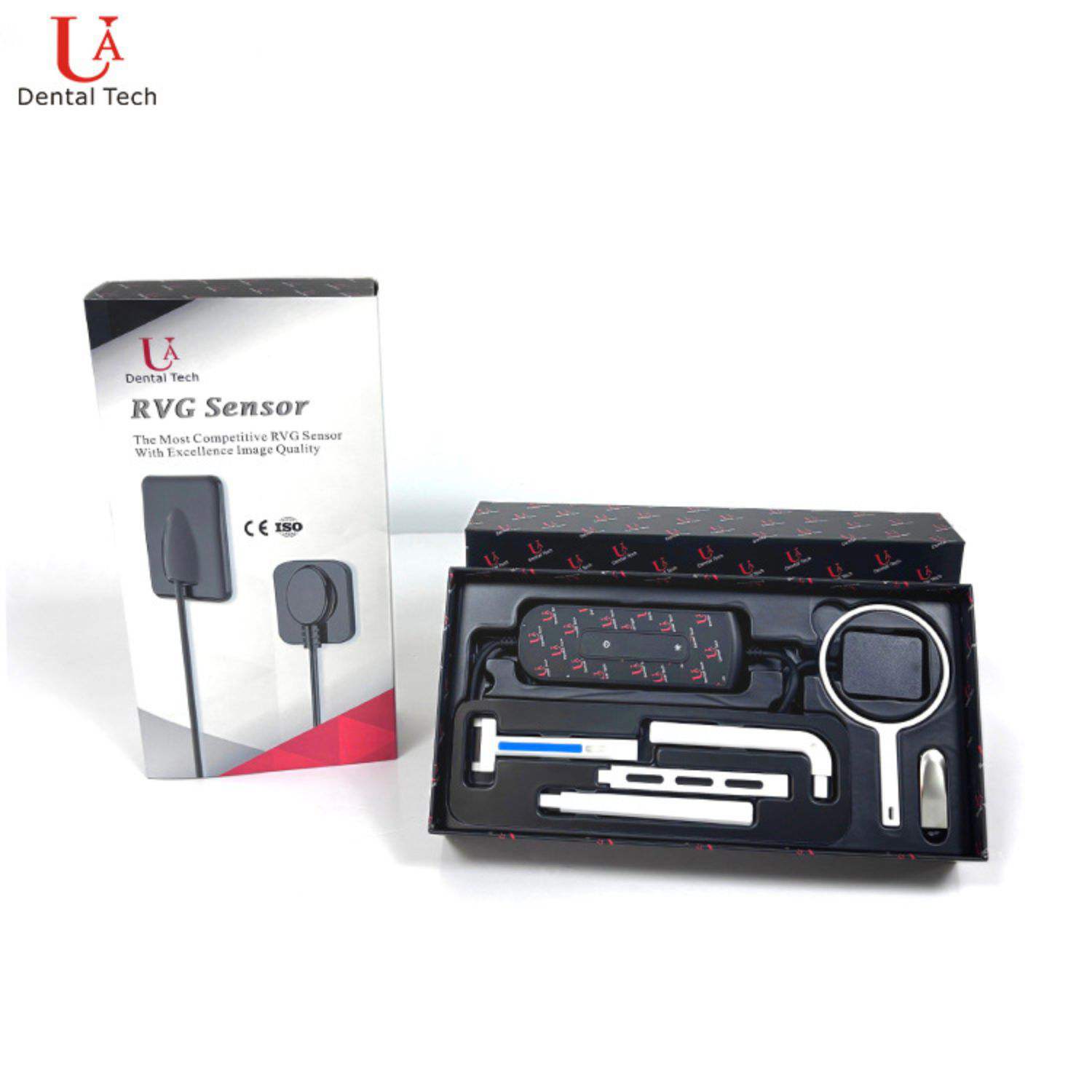
| In the box | Ask us | Sensor, positioner set, 100 sleeves, USB drive (13 items) |
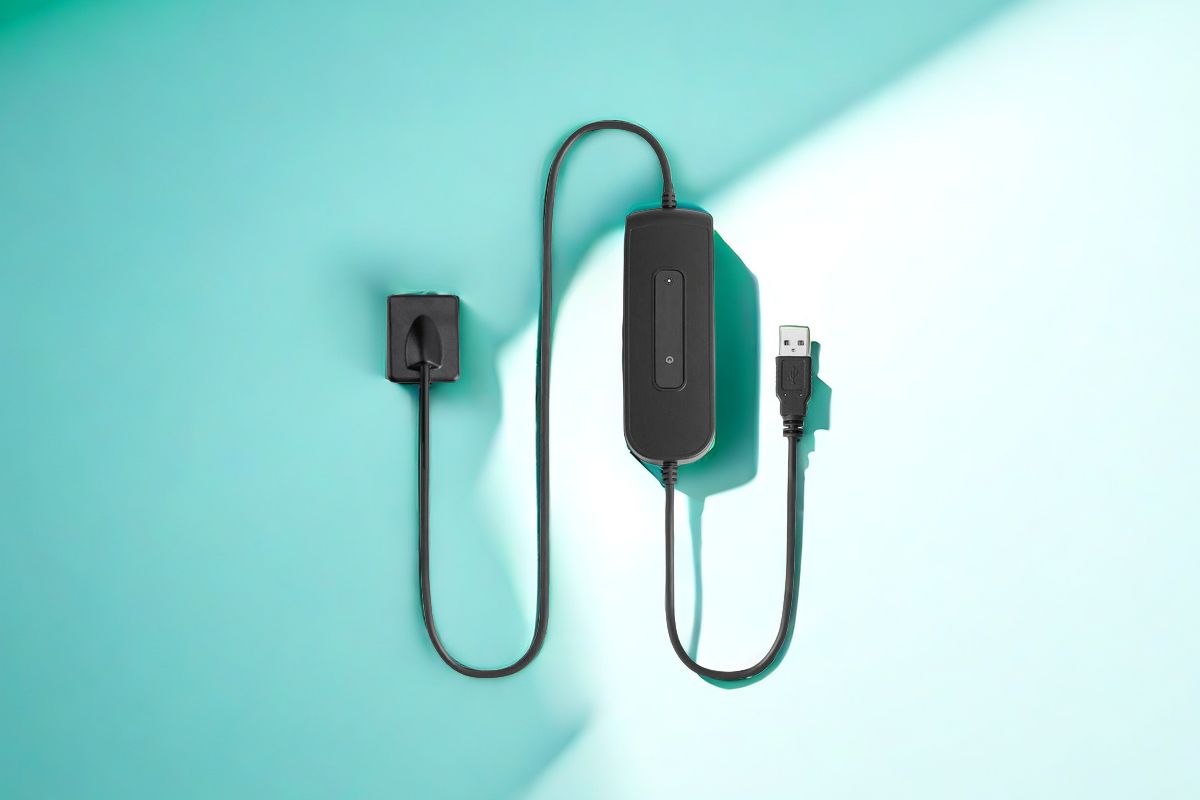
Choosing a dental RVG sensor starts with coverage. It's the one number you can't adjust in software. The XVS2530's imaging area is documented, and it arrives ready to use. The Portable sensor lists the higher resolution figure; if that's the one you want, message us for its imaging area and box contents before you order, so you know exactly what you're getting.
How much a Size 1.5 sensor captures
A size label isn't the imaging area. The XVS2530 is sold as Size 1.5, but its active area of 25 × 30 mm (about 1 × 1.2 in) works out to 750 mm². That's roughly 22% less than the 24 × 40 mm a size 1 receptor nominally covers, and about 59% of a size 2, going by the standard receptor dimensions listed in a 2025 technical review of intraoral digital radiography systems (Sampaio-Oliveira et al., Imaging Science in Dentistry).
| Receptor | Imaging area | Area |
|---|---|---|
| Size 1 (nominal) | 24 × 40 mm | 960 mm² |
| Size 2 (nominal) | 31 × 41 mm | 1,271 mm² |
| XVS2530 Size 1.5 | 25 × 30 mm | 750 mm² |
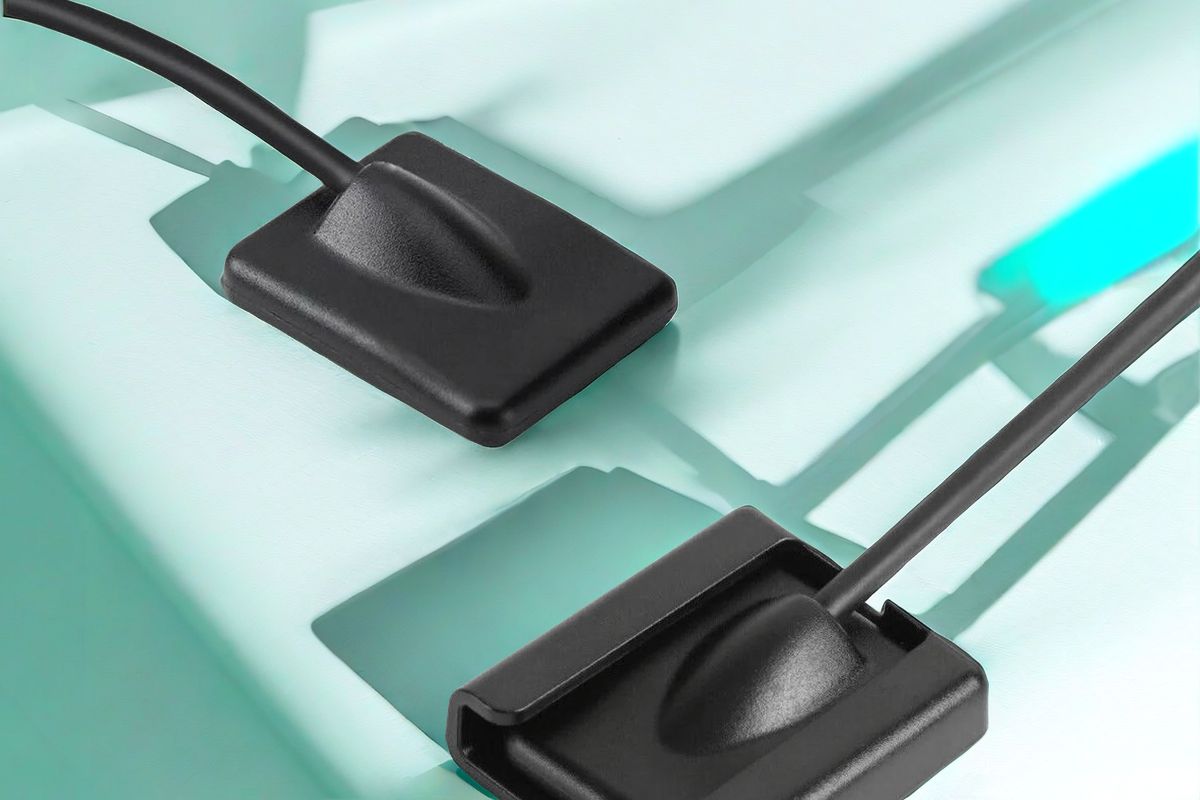
The trade-off cuts both ways. A smaller receptor is easier to place in small mouths and in children. A larger one covers more teeth per exposure, so you take fewer images for the same survey. For scale, the XVS2530's housing is about 1.2 × 1.5 in and 0.2 in thick.
What the resolution figures mean
A dental RVG sensor spec sheet usually gives two resolution numbers. Theoretical resolution comes straight from pixel size. The sampling limit is 1 ÷ (2 × pixel pitch), so 20 µm pixels top out at 25 lp/mm. True or actual resolution is what the maker measured, and makers don't all measure it the same way: the same review found theoretical claims running from 3.8 to 35.7 lp/mm, with inconsistent reporting across brands.
The resolution row in the table above comes from each manufacturer's figures, not a side-by-side test, so read the gap between our two sensors as a direction rather than a precise ratio. And positioning still decides most of what ends up on screen. No pixel count rescues a cone cut or a patient who moved.
Computer and software setup
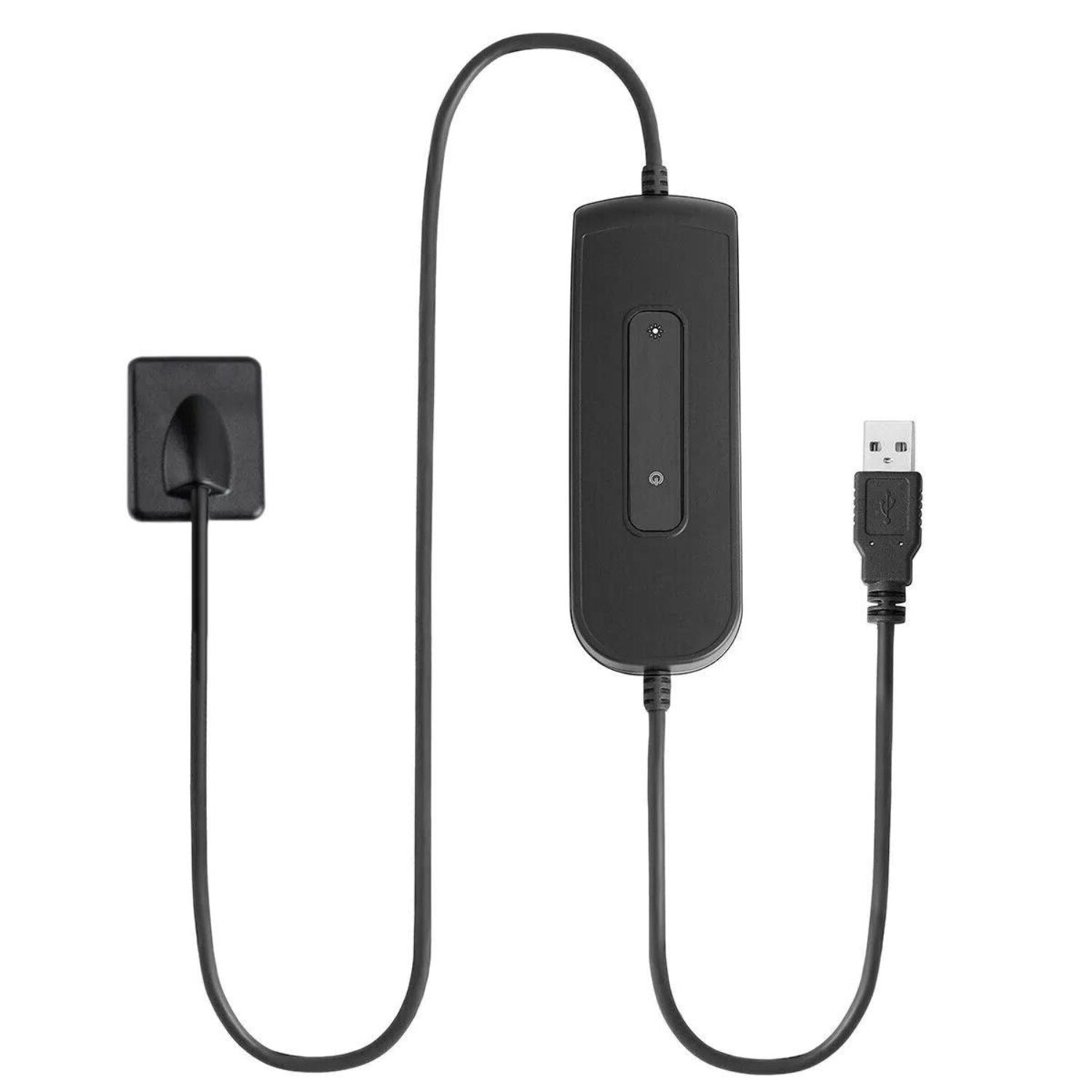
Plan where the PC goes before the sensor arrives. Both dental RVG sensors come with about 10 ft of cable, and it can be extended when the computer sits farther from the chair.
The XVS2530's licensed software is free to use for life and installs without IP settings. It organizes images by patient case, has smart contrast tools, and exports several formats for remote consultations. Setup is five steps from plugging in to the first exposure. They're on the XVS2530 product page, along with fixes for the four most common connection and activation errors.
On Windows 11? Message us before ordering.
What's in the XVS2530 box
- XVS2530 digital sensor (1 set)
- 512 MB USB drive
- Positioner parts: sensor holder, bracket, back bar, bent bar, front bar and positioning ring
- Aluminum plate, 40 × 40 × 6 mm
- 100 PE sensor sleeves, 42 × 200 mm
- Quick user guide
- Hanger sticker and 2 M3 × 10 countersunk tapping screws
At one sleeve per patient, the included sleeves cover your first 100 patients.
Sleeves, disinfection and cable care
CDC infection-control guidance classes digital radiography sensors as semicritical, since they touch mucous membranes. Cover the sensor with an FDA-cleared barrier during use. If the sensor can't take heat sterilization or high-level disinfection, CDC calls for, at minimum, cleaning and disinfecting it between patients with an EPA-registered hospital disinfectant that has intermediate-level (tuberculocidal) activity, following the manufacturer's instructions.
Don't autoclave or soak either sensor unless its instructions say that's allowed. The XVS2530's IP67 rating is about keeping dust and water out; it doesn't tell you which disinfectants the housing tolerates.
On a wired dental RVG sensor, the cable takes the most wear. Pick the sensor up by its body, never by the cord. Keep the cable from being pinched or bent sharply, and coil it loosely when you put it away.
Shipping, returns and warranty
- Shipping: free. Orders are processed in 1 day. US delivery takes 7–15 business days; other countries, up to 15–20 days.
- Cancellations: contact us within 12 hours of ordering.
- Returns: tell us within 15 days of delivery. Items must be unused and in their original packaging, and they have to reach us within 20 days of the return form being issued. The buyer pays return shipping.
- Hygiene rule: for health and hygiene reasons, a non-defective item can't come back without a valid reason.
- Defects: send your order number, proof of payment and photos, and we'll arrange the fix or the return.
- Warranty: 6 months on our dental equipment.
Full terms are in our return and refund policy.
Dental digital sensor wholesale and clinic orders
Fitting out several operatories, or buying for resale? Send the model and quantity on WhatsApp or through the contact page. Small orders are paid in full. Large orders take a 50% deposit, with the balance due once shipping is arranged, and offline bank transfer is available. Custom logos are possible on large-volume orders. Distributors can start on our dental equipment distributor page.
FAQ
What else do I need besides the sensor?
An intraoral X-ray unit and a Windows PC. An RVG dental X-ray setup has three parts: the unit makes the exposure, the sensor records it, and the software displays it. The sensor doesn't produce X-rays itself. Units are in our dental X-ray machine collection.
Should I choose a sensor or phosphor plates?
A wired sensor puts the image on screen seconds after the exposure. Phosphor (PSP) plates are wireless and come in sizes 0 to 3, but every plate goes through a scanner before you see the image. We carry both: Phosphor Plate Dental (PSP) and Phosphor Plate Scanner .
What does 16-bit mean on a dental RVG sensor?
Each pixel is recorded on a scale of 65,536 gray levels (2¹⁶). A standard 8-bit display shows 256, so the extra depth is headroom: you can brighten a dark interproximal area or push contrast without the image breaking into visible bands. Bit-depth claims across brands run from 8 to 24 bits and aren't always measured comparably, according to the 2025 review.
Does DCM export mean it connects to my practice software?
Not on its own. DCM files use the file format defined in the DICOM standard , so they open in DICOM viewers. Getting images into practice management or imaging software is a separate step (DICOM services, a TWAIN driver or a software bridge), and it depends on your exact software version. If that matters for your office, ask us before you order.