How to Run a Mobile Dental Clinic (Without Burning Out Your Team or Breaking Continuity of Care)
A mobile dental clinic is dentistry plus logistics, community partnership, and a lot of small decisions that compound. The clinical work might be familiar—but everything around it (power, water, privacy, sterilization flow, routing, follow-ups) is a different game.
-
Mobile clinics exist because many patients can’t come to you—work schedules, transportation, school policies, disability access, rural distance, immigration concerns, or just the reality that life is already maxed out.
-
The “secret” isn’t a fancier vehicle. It’s an operating system that makes care reliable: predictable days, clear scope, strong infection control, and a real plan for continuity.
1) Start with the why, then design the who and where
Most mobile programs fail quietly—not with a dramatic crash, but with inconsistent turnout, chaotic days, and no follow-up pipeline. Before you buy anything, decide what problem you’re solving and for whom, because your mission determines your route, staffing, and equipment.
A practical place to begin is a needs assessment (data + lived reality). Many guides recommend partnering locally and doing this early for a reason: it prevents you from building an expensive unit that doesn’t fit the community you want to serve.
-
Pick one primary population to start (examples: school-based kids, nursing home residents, migrant workers, rural towns).
-
Define the “access barrier” in one sentence (transportation, time off work, special needs, distance, fear/trauma, language).
-
Identify the hosting asset you’ll use (schools, community centers, shelters, worksites, long-term care facilities).
2) Define your scope like a surgeon: what you do, what you don’t, and what happens next
Your scope is not only clinical—it’s operational. Mobile dentistry rewards clarity. If you try to do everything everywhere, you’ll spend more time improvising than treating patients.
Competitor playbooks correctly emphasize picking a scope and measurable objectives early, and they’re right: scope drives the vehicle build, staffing mix, and funding narrative.
-
Start with a “core bundle” (common in mobile settings): exam, prophylaxis/periodontal maintenance as appropriate, fluoride, sealants, simple restorations, extractions (if equipped), radiographs, oral health education.
-
Decide your hard boundaries (e.g., no complex endo, no IV sedation, no surgical extractions) and build a referral lane.
-
Write a one-page “Care Pathways” doc for the top 10 scenarios (caries risk high, dental pain, abscess suspicion, perio needs, special needs patient, child without guardian present, etc.).
3) Choose your delivery model (this is where cost and reliability are decided)
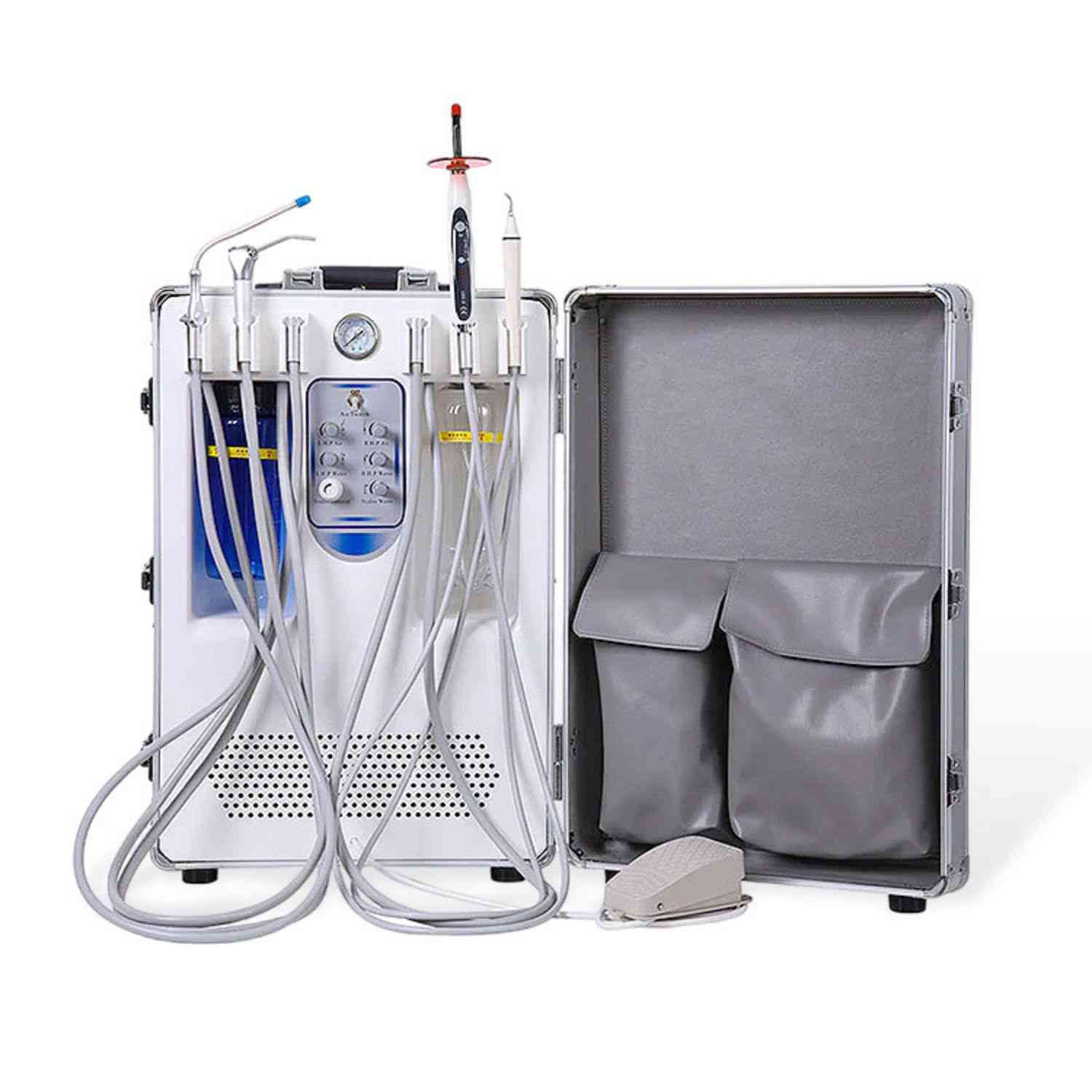
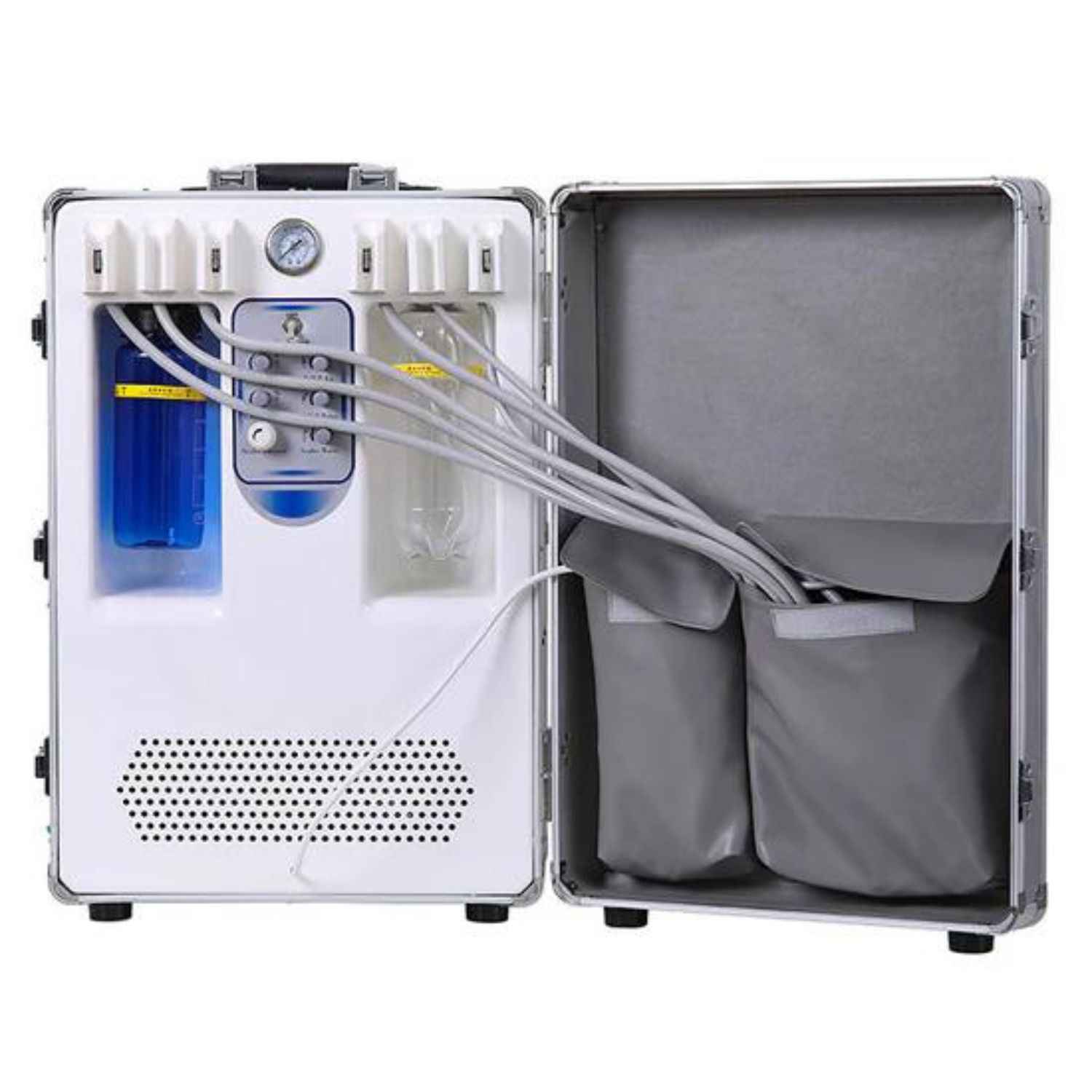
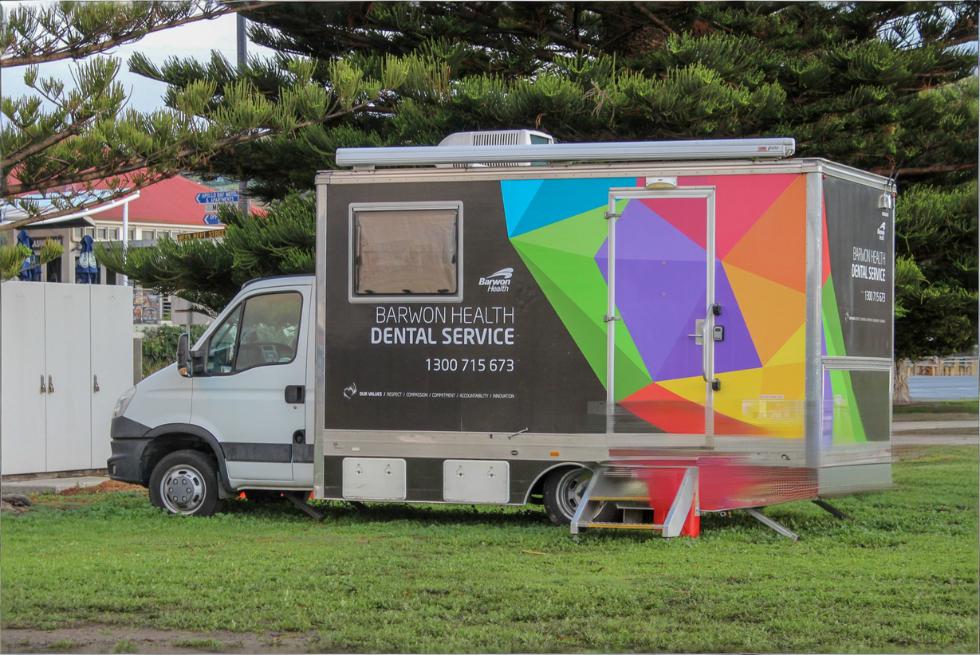
Mobile dentistry can mean a fully built dental coach, a trailer, or portable equipment deployed inside a facility. The best choice is the one that matches your route realities (parking, power access, patient volume, weather, storage, and staff comfort).
Many launch guides suggest weighing new vs. used units, disability access, and ergonomic layout because those decisions show up every day in throughput and staff fatigue.
|
Model |
Best for |
Strengths |
Trade-offs / watch-outs |
|
Full mobile clinic (bus/coach) |
High volume, multi-site routes, varied procedures |
Fast setup, consistent environment, strong branding |
Higher capex/maintenance, driver needs, parking constraints |
|
Dental trailer |
Semi-fixed rotations, predictable host sites |
Often lower cost than a coach; can be feature-rich |
Still needs tow vehicle + site logistics; turnaround time |
|
Portable (in-building) |
Schools, nursing homes, shelters with usable rooms |
Lowest vehicle complexity; flexible rooms |
Sterilization flow + privacy must be engineered; more setup labor |

4) Licensing, permits, and compliance: don’t “wing it” across state lines
Requirements can be state-specific and sometimes surprisingly detailed (who can own/operate, documentation, equipment standards, emergency follow-up expectations). Build a compliance checklist for every state/county you operate in and update it annually.
For example, California’s Dental Board lists mobile dental clinic permit requirements including an application fee, a licensed dentist responsible for the unit, evidence of emergency follow-up care, communication facilities, and certification of regulatory compliance; permits are non-transferable and require renewal.
-
Treat “emergency follow-up” as a real operational plan, not a checkbox. Some boards explicitly ask for it.
-
If you operate in Tennessee, regulations specify who may own/operate a mobile dental clinic (e.g., dentist licensed in TN, certain government/nonprofit/hospital entities).
-
If you’re collecting or transmitting patient information electronically, build HIPAA workflows (patient communications, vendor agreements, notice practices, minimum necessary). The ADA highlights common HIPAA questions dentists face, including notices and business associates.
5) Build a team that can do “field dentistry” (it’s not the same as clinic dentistry)
The best mobile teams share one trait: they’re calm under constraint. Small spaces, changing sites, weather, and last-minute schedule shifts are normal. Hiring only for credentials misses what matters most: adaptability and mission fit.
Successful programs emphasize hiring people who embrace the mission and work well in tight environments—because mobile units are a teamwork amplifier (good or bad).
-
Clinical: dentist(s), hygienist(s), assistant(s) appropriate to scope and state supervision rules.
-
Ops: driver/logistics lead (sometimes the most important role), site coordinator, sterilization lead, front desk/billing support (can be remote + onsite hybrid).
-
Culture: train “micro-communication” (handoffs, callouts, closed-loop confirmation) to prevent errors when space is tight and days are fast.
6) Your daily operating system: treat the clinic like choreography
On a mobile day, minutes disappear. If you want more chair time, you need fewer surprises: pre-packed kits, labeled storage, standardized patient flow, and a “site readiness” checklist that the host signs off on.
Launch guides often talk about efficiency—minimizing downtime, delegating to auxiliary staff, and keeping travel-to-treatment ratios healthy—because those levers determine sustainability.
-
Before the day: confirm parking + power + restroom access + Wi-Fi/cellular, verify consent/guardian rules (especially for schools), preload schedules, print backup forms.
-
During the day: keep a visible “flow board” (arrivals, in-chair, radiographs, waiting, discharge, referrals).
-
After the day: reconcile charts, sterilization logs, supply depletion, referral list, and no-show follow-up messages within 24 hours.
7) Infection prevention in a mobile environment: make it boring (that’s the goal)
Infection control is harder on the road because you’re always adapting—different sites, variable surfaces, sometimes limited water, and staff moving in tight quarters. That’s exactly why you need stricter routines, not looser ones.
CDC guidance for dental settings includes Standard Precautions and emphasizes proper sterilization and disinfection practices.
-
Sterilizer monitoring: CDC recommends monitoring sterilizers at least weekly using a biological indicator (spore test) with a matching control.
-
Workflows: physically separate “dirty → clean → sterile” zones even if they’re small (bins, color coding, one-way movement).
-
Exposure control: dentistry involves occupational exposure risk; OSHA’s Bloodborne Pathogens standard applies to occupational exposure to blood/OPIM and should drive your written plan + training.

8) Community trust is a clinical tool (and it’s earned, not announced)
In many communities, the barrier isn’t only transportation—it’s history. People may have had painful dental experiences, felt judged, or learned that healthcare systems are unpredictable. A mobile clinic can either feel like care arriving or like a pop-up that disappears.
The highest-performing programs don’t just “market.” They co-design with local leaders and avoid stepping on existing providers’ toes—building cooperation instead of competition.
-
Assure local dentists there’s no conflict of interest; some programs check coverage records to avoid duplicating patients already receiving care.
-
Work through trusted messengers (school nurses, public health nurses, faith/community leaders), not just flyers.
-
Use dignity-first language: “We’re here for you” beats “underserved population” in patient-facing materials.
9) Continuity of care: turn “one good day” into a dental home
If mobile dentistry only produces one-time visits, you’ll do a lot of heroic work—and still leave disease cycles intact. The deeper win is continuity: a repeatable schedule, predictable follow-ups, and a record system that makes the next visit easier.
The American Academy of Pediatric Dentistry defines a “dental home” as an ongoing relationship delivering comprehensive, continuously accessible, coordinated, compassionate, culturally sensitive care—patient- and family-centered.
-
Build a referral network before you launch (endo, oral surgery, pediatrics, perio, dentures) and agree on warm handoffs.
-
Create a “follow-up promise” (example: Every patient leaves with either a next appointment, a referral appointment request, or a 48-hour outreach plan).
-
Design your schedule as a route of return (e.g., the same school every 8–12 weeks) so prevention compounds over time.
10) Money and sustainability: funders don’t pay for passion—they pay for outcomes
You’ll likely blend revenue sources: reimbursements (if applicable), grants, donations, sponsorships, contracts with districts or facilities, or partnerships with health plans. The more your program depends on funding, the more your reporting discipline matters.
Competitor frameworks repeatedly highlight budgeting, fundraising, and the need for accurate record-keeping and meaningful statistics because funders expect evidence of impact and improvement plans.
-
Build a budget that includes true mobile costs (vehicle maintenance, fuel, insurance, driver time, downtime, connectivity, repairs, depreciation).
-
Track a small, powerful KPI set: patients seen, sealants placed, urgent pain cases resolved, referral completion rate, no-show rate, cost per patient, and “return visit within X months.”
-
Tell funders the truth: show shortfalls and what you’re changing (sites, hours, staffing, outreach).
11) Risk management: plan for emergencies, data privacy, and simple things like “where do we park?”
Risk is rarely the dramatic scenario you imagine. More often it’s a missed consent, a broken compressor, a dead battery, a spill, a privacy slip, or a day derailed because the site’s promised power outlet doesn’t exist.
Some state boards explicitly require evidence of emergency follow-up care and communication capability, which is a good standard even when it’s not required.
-
Write your “what if” playbook: medical emergency, dental emergency, equipment failure, weather cancellation, data outage, staff absence.
-
Keep redundant communication (cell hotspot + backup phone) and paper downtime forms for charting.
-
Make privacy physical: sound machine, visual barriers, screen privacy filters—small things that build patient trust fast.
12) A simple launch path that actually works
You don’t need a perfect program to start—you need a repeatable one. Start narrow, learn quickly, and scale once your days are calm.
Most “how to start” guides list planning steps (need, delivery strategy, budget, fundraising, advertising, risk mitigation). That’s useful—but the differentiator is building the operating rhythm and continuity loop from day one.
-
Pilot for 60–90 days with 1–2 sites and a tight scope.
-
Hold a weekly 30-minute “after action” review: what broke, what surprised you, what you’ll standardize.
-
Expand only when your referral completion rate and follow-up process are stable—not when your calendar is merely full.
Closing thought: mobile dentistry is dignity on wheels
When it works, it doesn’t feel like a one-off event. It feels like the community can rely on you—patients know when you’ll be back, staff know the flow, and local partners trust your process. That’s how you deliver care that’s not only accessible, but lasting.