Extending the Lifespan of Your Dental Handpieces: A Comprehensive Guide
If you’re like most clinicians, your handpieces are the “silent partners” in every procedure—barely noticed when they’re working, painfully obvious when they fail. Beyond the frustration, a failing handpiece means lost chair time, stressed staff, and a patient who starts to wonder about your standards.
This guide is designed to feel like a conversation with a colleague who has already made all the expensive mistakes—and is sharing what actually keeps handpieces alive for years, not just months. We’ll blend evidence-based recommendations with real-world workflows so you can extend lifespan and make your team’s life easier.
1. Why Handpieces Fail So Early (And Why It’s Not Your Fault… Yet)
Even careful teams often burn through handpieces faster than they should. Many failures aren’t caused by a single “big mistake” but by dozens of tiny habits that quietly wear down bearings, chucks, and turbines.
Manufacturers and organizations like the Centers for Disease Control and Prevention (CDC) emphasise that proper cleaning, lubrication, and heat sterilization are essential both for infection control and for equipment longevity—but they also acknowledge that instructions vary by model and must be followed exactly.
-
Common “silent killers” of handpieces include:
-
Over- or under-lubrication
-
Running at incorrect air pressure
-
Poor air and water quality (dust, oil, moisture)
-
Inconsistent or rushed sterilization workflows
-
Worn or cheap burs that vibrate and damage bearings
When you zoom out, the goal isn’t just “don’t break the handpiece.” It’s to design a repeatable, idiot-proof system that protects delicate micromechanics even when the day is hectic and everyone is tired.
2. Understanding Your Handpieces: What You’re Really Protecting
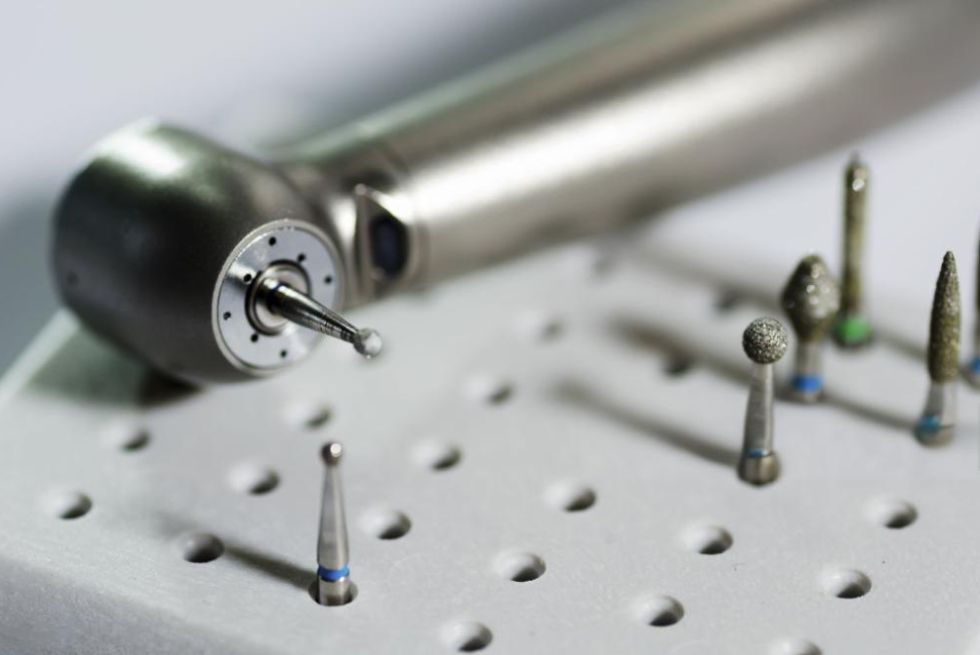
Inside that sleek metal shell are precision-engineered components spinning up to 400,000 rpm. A tiny bit of dust or imbalance that would be trivial in another tool can be catastrophic at turbine speeds.
Most practices use a mix of:
-
High-speed air turbines (for cutting and crown prep)
-
Low-speed or contra-angle handpieces (for finishing, polishing, endo)
-
Electric micromotor systems
-
Surgical handpieces and specialty attachments
Each category has its own lubrication and sterilization instructions, but they share a core truth: they’re only as healthy as the air, water, burs, and workflows around them.
-
Key internal components you’re trying to protect:
-
Bearings and spindle/turbine rotor
-
Chuck/collet that grips the bur
-
O-rings and seals
-
Fiber optics and internal water/air channels
If your team understands these parts—not just “the handpiece”—their decisions suddenly make more sense. For example, a vibrating bur isn’t just annoying; it’s a bearing killer.

3. Life Expectancy: What’s Realistic With Good Care?
You’ll sometimes hear numbers thrown around in sales conversations: “500 sterilisation cycles,” “several years of daily use,” and so on. With proper maintenance, high-quality handpieces can indeed last through hundreds of sterilization cycles and multiple years of service, especially in busy but well-organized practices.
But lifespan isn’t just about the hardware spec—it’s about your systems:
-
How consistently does every assistant follow the same protocol?
-
Is there a clear owner of “handpiece health” in the clinic?
-
Are you tracking failures and learning from them, or just sending items out for repair and moving on?
-
Signs your current maintenance system is shortening lifespan:
-
You’re sending the same handpiece for repair more than once a year
-
Chucks feel “loose” or burs wobble after only a few months
-
New team members aren’t formally trained on reprocessing—just told “do it like the others”
-
Handpieces come out of the autoclave wet, discoloured, or with visible residue
With a good system, it’s realistic to double the lifespan you’re currently getting simply by tightening your processes and training.
4. Daily Maintenance Workflow (Per Patient & End-of-Day)
Think of daily maintenance as the “brushing and flossing” of your handpieces. Skip it, and everything downstream (repairs, failures, infection control) gets worse and more expensive.
Organizations and manufacturers consistently recommend this pattern: clean, flush, lubricate (if required by the model), package, and heat sterilize between patients, rather than relying on surface disinfection alone.
-
A practical per-patient routine (5–7 minutes total per batch):
-
Immediately after use
-
Remove the bur (never autoclave with a bur in place).
-
Wipe external surfaces with a neutral detergent and soft brush; avoid abrasive cleaners.
-
Flush & clean
-
Run the handpiece on the unit for the manufacturer-recommended time to flush internal lines.
-
Rinse under cool running water from the side, not directly into the head, to avoid driving contaminants inward.
-
Lubricate (if lubricated model)
-
Use the correct spray/adaptor; insert at the drive end and spray until clean oil exits the head.
-
Run on the unit with a test bur to expel excess oil and debris.
-
Dry, package, sterilize
-
Thoroughly dry before bagging, then seal in an appropriate sterilization pouch and autoclave according to instructions.
This might look “heavy” on paper, but once standardized, most teams can process a full batch of handpieces quickly and consistently.
5. Autoclaving Without Destroying Your Handpieces
Sterilization is non-negotiable. The challenge is doing it in a way that protects your equipment rather than cooking it. The CDC and the American Dental Association (ADA) both recommend using FDA-cleared dental handpieces and sterilizing them according to manufacturer instructions, typically by steam autoclave between every patient.
Many manufacturers specify steam sterilization parameters in the range of roughly 121–134°C (250–273°F) for a defined time, often 15–30 minutes of exposure, depending on the cycle.
-
Autoclave habits that shorten handpiece life:
-
Overloading trays so steam doesn’t circulate freely
-
Stacking pouches or wrapping too tightly
-
Leaving handpieces in to “slow cool,” causing condensation and corrosion
-
Using dry heat or chemiclaves on models not designed for them
A better approach is to treat handpieces like premium instruments, not generic metal tools:
-
Give them space: don’t cram pouches together; allow steam circulation.
-
Respect drying: let the full cycle finish; don’t crack the door early.
-
Remove them promptly once the cycle is complete to avoid moisture condensing inside.
6. Lubrication: Getting the “Goldilocks” Zone Right
Insufficient lubrication is one of the most commonly cited causes of premature handpiece failure; too much lubrication can be nearly as bad, driving oil into the head and compromising performance.
Think of lubrication as the bloodstream of your handpieces:
-
Too little → friction, heat, bearing wear, turbine noise.
-
Too much → sluggish performance, oil spray into the mouth, contaminated optics and water lines.
-
Simple rules of thumb:
-
Use only manufacturer-approved oils or systems (generic oils can be too thick or chemically incompatible).
-
Lubricate before every autoclave cycle unless your handpiece is explicitly “lube-free.”
-
Always run the handpiece with a test bur after oiling to purge excess oil.
For chuck mechanisms in particular, a tiny amount of directed oil can dramatically reduce wear and expensive repairs—this is a high-value micro-habit your team can adopt weekly.
7. Air, Water, and Pressure: The “Environment” Your Handpieces Live In
Even a perfectly oiled handpiece will fail early if the air and water feeding it are dirty or poorly regulated. At turbine speeds, a microscopic dust particle can act like a wrecking ball inside a bearing.
-
Environmental factors to keep under control:
-
Air pressure
-
Many manufacturers recommend delivery pressures around ~2.5–3.0 bar (36–44 psi) at the handpiece for high-speed turbines. Too high → accelerated bearing wear; too low → torque load and overheating.
-
Air quality
-
Compressors should be in clean, well-ventilated rooms with filters changed regularly to keep air dry and dust-free.
-
Water quality & lines
-
Use treated or filtered water and follow a waterline disinfectant protocol to prevent biofilm and blockage.
If you’re seeing recurring failures across multiple handpieces, always audit air, water, and pressure before blaming the devices themselves.
8. Burs: The Smallest Part With the Biggest Impact
Cheap or worn burs don’t just make cutting feel “draggy”—they can physically shake your turbine apart. Research and expert commentary highlight that poorly balanced burs create vibration patterns that transfer directly to bearings, accelerating wear and causing early turbine failure.
-
Smart bur practices to protect handpieces:
-
Source burs from reputable manufacturers with consistent shaft dimensions.
-
Roll burs on a glass slab to detect wobble before use.
-
Retire burs that show wear, bending, or reduced cutting efficiency instead of “just finishing this one prep.”
Over a year, the cost difference between premium and bargain burs is typically dwarfed by the price of even a single turbine replacement—this is one of the clearest “false economies” you can eliminate.
9. Common Symptoms, Likely Causes, and What To Do (Quick Reference Table)
The table below can double as a troubleshooting poster in your reprocessing area:
|
Symptom you notice |
Likely cause(s) |
Immediate action in-clinic |
Longer-term fix / prevention |
|
Handpiece is noisy / high-pitched whine |
Dry or worn bearings, excess friction |
Remove from service; try lubrication & test run |
Review lubrication frequency; consider repair |
|
Bur wobble or visible “runout” |
Worn chuck/collet, bent or cheap bur |
Replace bur; if wobble persists, remove from use |
Chuck maintenance or turbine/chuck replacement |
|
Loss of power / cutting inefficient |
Low air pressure, blocked water/air channels, worn burs |
Check pressure at unit; flush lines; change bur |
Service unit; improve compressor maintenance |
|
Overheating at head or bur |
Inadequate water flow, overpressure, poor lubrication |
Stop immediately; test water spray and pressure |
Train team on correct pressure and cooling water |
|
Oil or water spraying from head |
Over-lubrication, incorrect adaptor, internal seal issues |
Run longer after oiling to purge excess |
Review staff technique; service seals if persistent |
|
Corrosion or discoloration after autoclave |
Residual chemicals, wet storage, incorrect cycle |
Review cleaning agents; ensure complete drying |
Adjust autoclave cycle and packaging practices |
Use this as a “decision aid” so nurses and assistants don’t need to guess whether a handpiece can safely stay in rotation.

10. Weekly & Monthly Checks That Pay Off Big
Daily routines keep things clean; weekly and monthly checks keep you ahead of failures. Many repair specialists report that practices implementing simple scheduled checks see fewer emergency breakdowns and lower overall repair spend.
-
Helpful weekly habits:
-
Check chuck grip with a test bur; look for any looseness or unexpected movement.
-
Listen to each handpiece briefly at operating speed for changes in pitch, vibration, or heat.
-
Wipe fiber-optic ports with alcohol and lint-free swabs to maintain light quality.
Monthly, it’s worth formally noting which handpieces seem “noisier” or weaker and planning proactive service before they fail mid-procedure.
11. Training Your Team: From “Instructions” to Culture
You can buy the best handpieces, oil, and autoclaves on the market—but if training is “shadow someone for a day and copy them,” your results will be inconsistent.
Turn maintenance into a shared culture, not a set of rules people are vaguely aware of:
-
Elements of a strong maintenance culture:
-
A simple, written SOP with clear steps and images at the reprocessing station
-
A named “handpiece champion” responsible for training and periodic audits
-
Short refreshers when a new handpiece model, lubricant, or autoclave is introduced
-
Non-punitive feedback: “we fix the process,” not “we blame the person”
You’ll know it’s working when staff start to notice small changes in sound or feel and take initiative to pull a handpiece out of service before it fails.
12. Repair vs Replace: Making Financially Smart Decisions
Not every noisy handpiece should go straight to recycling. At the same time, endlessly repairing a very old or heavily used device can be a money sink.
Manufacturers and service companies suggest you look at repair cost as a percentage of new purchase price, plus the unit’s age and history, to decide.
-
A simple decision lens:
-
If the repair quote is < 30–40% of replacement cost and the handpiece is otherwise young and reliable → repair is usually sensible.
-
If the repair quote is > 50–60% of replacement cost, or this is the second major repair in a short period → replacement may be more economical.
When your maintenance is strong, you’ll likely see fewer emergency failures and more predictable “end-of-life” replacements you can plan into your budget.
13. The Business Case: How Good Maintenance Pays for Itself
Let’s make it concrete with a simplified example. Suppose:
-
A new high-speed handpiece costs $1,200.
-
Poor maintenance means it lasts ~2 years before replacement.
-
Improved maintenance doubles its life to ~4 years.
Over 8 years, that’s either:
-
4 handpieces (poor care): 4 × $1,200 = $4,800
-
2 handpieces (good care): 2 × $1,200 = $2,400
Even allowing a generous $150/year for lubrication, accessories, and occasional repairs, you’re still ahead financially—plus you’ve avoided the hidden costs of cancellations, delays, and staff frustration.
Extend this across a full set of handpieces for multiple surgeries, and the ROI becomes very hard to ignore.
14. Quick-Reference Checklist (Print-and-Use)
To turn all this into action, here’s a concise checklist your team can follow.
-
Per patient / after each use
-
Remove bur; wipe exterior with soft brush and neutral detergent.
-
Flush the handpiece on the unit per instructions.
-
Lubricate with the correct adaptor until clean oil emerges (if applicable).
-
Run with a test bur to purge excess oil.
-
Dry, pouch, and autoclave using the validated cycle.
-
Daily / end-of-day
-
Confirm autoclave log is complete; note any cycle errors.
-
Empty and clean maintenance unit (if used) and check oil levels.
-
Visually inspect handpieces for obvious damage, corrosion, or residue.
-
Weekly
-
Check air pressure at chair and compare with manufacturer recommendations.
-
Inspect and test burs; discard any that wobble or show wear.
-
Clean chuck mechanisms and fiber-optic windows with recommended products.
-
Monthly
-
Review repair history and identify repeat offenders.
-
Run a short in-team refresher on one aspect of maintenance (e.g., correct oiling technique).
15. Bringing It All Together
Extending the lifespan of your dental handpieces isn’t about any single “magic product.” It’s about systems, habits, and culture:
-
The right daily workflow that becomes automatic even on your busiest days.
-
Respecting manufacturer and guideline-based instructions for sterilization and lubrication.
-
Treating burs, air, and water as part of the handpiece ecosystem—not as separate issues.
-
Empowering your team to notice small problems early and act on them.
Do that, and your handpieces stop being a frequent headache and start behaving like what they were meant to be: reliable, long-term partners in excellent clinical care.